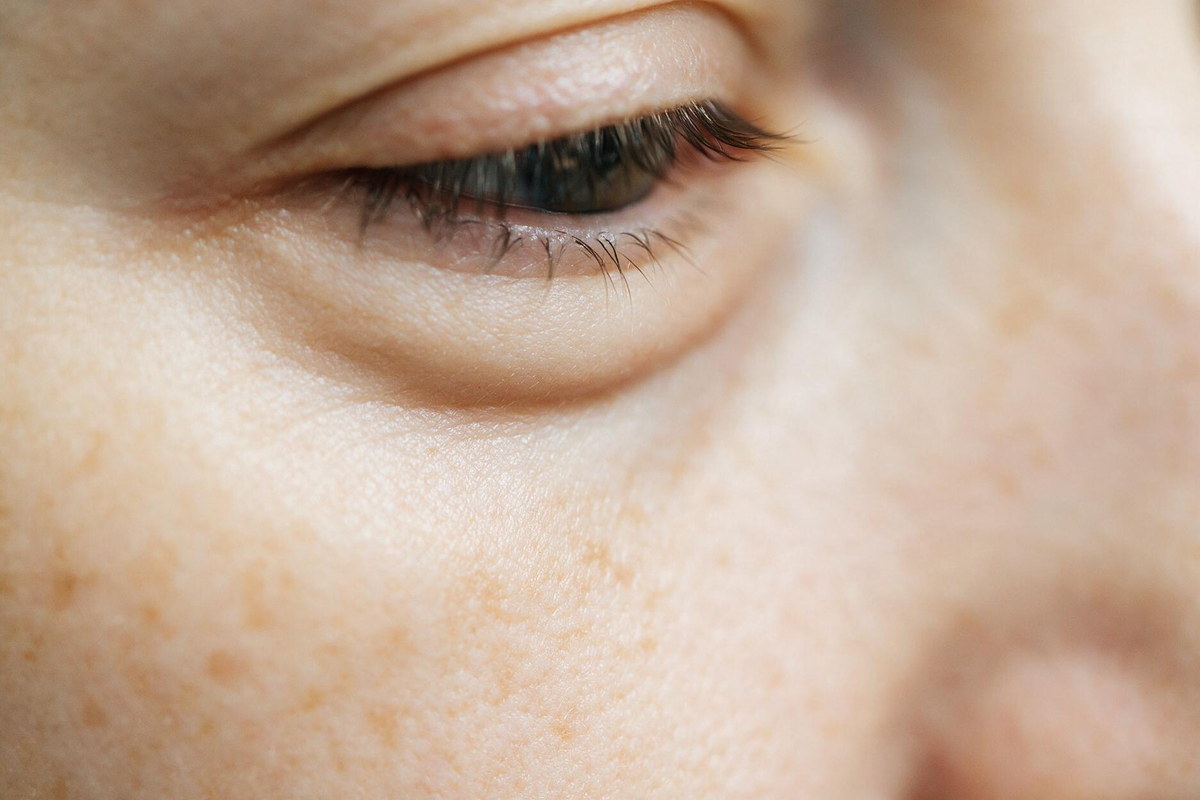
Most people who ask me about under eye bags assume they are looking at one problem. In fact three separate things overlap in the lower lid: temporary fluid, fat pads that have come forward, and skin that has lost its tone. No plan works until you know which one dominates. Removing fat from someone whose real issue is morning puffiness helps nobody, and no cream pushes a herniated fat pad back where it came from. Here I explain how I tell the three apart, how the anatomy changes with age, what non-surgical approaches can and cannot reach, and where lower eyelid surgery actually fits.
Separating these is the first step of any examination.
I offer patients a simple test. If it is marked when you wake and better by midday, fluid is leading. If it looks the same at every hour, the change is structural. Past the mid-forties, most people have some of both.
The eye sits in its socket cushioned by fat. What holds that fat back is a thin membrane behind the lid. Over time this membrane weakens and the fat herniates forward. In the lower lid we see this across three separate compartments, and the one nearest the nose is usually the first to show.
The key point is this: the fat does not increase, it moves. Losing weight rarely removes an under-eye bag and can make it more obvious by reducing the surrounding support. I hear “I lost weight but the bags stayed” often, and that is the reason.
The lid is not the only thing that creates the look. With age the fat of the upper cheek descends and volume over the cheekbone is lost. The junction between lid and cheek, once a smooth surface, becomes a two-step contour with a hollow below and a fullness above. Even if the lid itself is unchanged, the contrast makes the bag stand out more.
The bone changes too: the lower rim of the orbit recedes over the years and gives less support. The same volume of fat therefore looks more prominent at fifty than at thirty. Genetics matter as well, and in families where bags appear early the picture can start in the late twenties.
What drives puffy eyes in the morning is fairly predictable: a late or salty meal, alcohol, too little sleep, sleeping face down, an allergy flare, fluid retention before a period. All of these are temporary and modifiable.
Swelling that is present on both sides, persists all day and does not settle deserves a wider look, because thyroid dysfunction, kidney disease and heart failure all show themselves here. When someone comes to me with lower lid swelling I never stop at the lid; I ask how long it has been there, whether it varies through the day, and whether anything else is swollen.
Swelling in one eye only, particularly with redness or pain, is a different matter altogether and may mean infection, an allergic reaction or a problem within the orbit. That should not be left to see how it goes.
It is fairer to say up front what these approaches reach and what they do not.
Where fluid leads, everyday measures genuinely help: less salt, sleeping with the head slightly raised, a brief cool compress in the morning, and getting allergy under control. This group sees a real difference.
Where skin quality and fine lines lead, skincare, sun protection and treatments suited to this area improve how the tissue looks. None of them pushes a prominent fat pad back.
Where the lid-cheek hollow leads, softening that step can improve the contour. This too has a limit: filling the hollow while a clear fat herniation sits above it usually makes the whole region look heavier. It is the most common source of regret in this part of the face.
In short: routine addresses fluid, skincare addresses skin, contouring addresses the step. Displaced fat can only be repositioned or removed surgically.
When the fat prominence is clear and it bothers the person, lower eyelid blepharoplasty enters the conversation. The aim is not to take all the fat out. Current practice leans towards repositioning it so that it fills the hollow below, because over-resected lids look hollow and older within a few years. Judgement about how much matters more than technique here.
What I assess before deciding: the degree of fat herniation, how much skin excess there is, how tight the lower lid is, whether there is dry eye, and the person's general health. In a patient with a lax lower lid, removing skin alone can turn the lid outward, so the plan is never identical from one person to the next. I cover the functional side of these decisions under cosmetic eyelid procedures.
Surgery is not an automatic next step. If morning puffiness dominates and it settles by midday, an operation does not belong in the discussion at all.
Bags that developed slowly over years, affect both sides and cause no pain are not urgent; they belong in a planned consultation. Do not wait if:
The examination itself is straightforward: which fat compartment is prominent, how lax the skin is, how much tone the lower lid has, and the state of the tear film. Those few minutes decide which route suits you, and often whether any procedure is needed at all.
It depends which component dominates. Morning puffiness driven by fluid improves with routine changes. A permanent bag caused by displaced fat pads can only be corrected surgically; no cream or massage pushes that fat back.
Less salt, sleeping with the head slightly raised, adequate sleep, a brief cool compress in the morning, and controlling allergy all reduce the fluid component. Skincare and sun protection support skin quality. None of this changes a structural bag.
A late or salty meal, alcohol, too little sleep, sleeping face down, allergy flares and premenstrual fluid retention. All are temporary. If the puffiness is present on both sides all day and never settles, thyroid, kidney and cardiac causes should be reviewed.
Swelling that is marked on waking and better by midday is most likely fluid. Fullness that looks identical at every hour of the day points to a fat pad. After the age of forty, most people have both together.
Yes. Where bags run in the family, the membrane behind the lid weakens earlier and the picture can begin in the late twenties. In younger patients I review allergy and sleep first, because the fluid component is usually larger than people expect.
Persistent swelling on both sides that never settles warrants review for thyroid dysfunction, kidney disease and heart failure, particularly if the hands and legs are swollen too. Swelling in one eye that appears quickly with redness or pain needs same-day assessment.
 English
