

Lower eyelid blepharoplasty is a surgical procedure that reshapes the under-eye area by removing or repositioning herniated fat and, when needed, trimming excess skin. It is performed for both cosmetic and functional reasons, and it addresses the puffiness, bags and lid-cheek irregularity that make the face look tired regardless of how rested you feel.
The lower lid carries the thinnest skin on the face, and lower lid surgery is the part of eyelid surgery that demands the most restraint. The goal is not to take tissue away. It is to smooth the transition between the lower lid and the cheek.
Swelling that is worse in the morning and settles during the day is a different problem from a permanent bag, and the two are treated differently. Separating them decides whether a patient needs surgery at all.
At the examination I ask the patient to tilt the head back slightly and look up. If the fullness increases with this manoeuvre, fat herniation predominates; if it does not change, skin and fluid are the larger part of the picture.
I address uncontrolled thyroid disease, untreated allergy, significant dry eye or marked lid laxity before considering surgery. Lower lid surgery performed without recognising laxity can pull the lid downward.
There are two main routes, and the choice depends on the structure of the problem rather than the patient's age.
The procedure can be performed under local or general anaesthesia depending on the patient, and usually does not require an overnight stay.
For the first week I ask patients to avoid strenuous activity, bending forward and hot environments, not to rub the eyes, to wear sunglasses outdoors, and to pause eye make-up until sutures are removed. Follow-up is at one week, one month and three months.
Lid retraction and ectropion are the most common reasons for revision after lower blepharoplasty. I discuss how these are corrected on the revision (correction) eyelid surgery page, and the condition itself on the ectropion page.
When the complaint comes from hollowing and shadow rather than herniated fat, injection-based treatments often suit better than surgery. Dermal fillers support the tear trough, mesotherapy improves skin hydration and texture, and botulinum toxin softens crow's feet. For puffiness driven by fluid retention, no procedure gives lasting benefit; salt intake, sleep, allergy and thyroid status have to be addressed first.
All of these are collected under periocular rejuvenation. If the upper lids are also heavy, upper eyelid blepharoplasty is assessed within the same plan; for an overview see cosmetic eyelid procedures.
I am an ophthalmologist practising oculoplastic surgery in Kadıköy, Istanbul. I hold the FEBO diploma of the European Board of Ophthalmology and am an active member of ESOPRS, the European Society of Ophthalmic Plastic and Reconstructive Surgery, and of the Oculoplastic Surgery Unit of the Turkish Ophthalmological Association.
For patients travelling from abroad, I ask that the trip be planned around the recovery timeline rather than the other way round: enough time to attend the suture removal visit before flying home, and a clear route for follow-up questions afterwards. Lower lid healing continues for months after the visible bruising has gone, so remote follow-up matters here more than in most procedures.
Some of these point to a medical rather than a cosmetic problem, and early assessment matters.
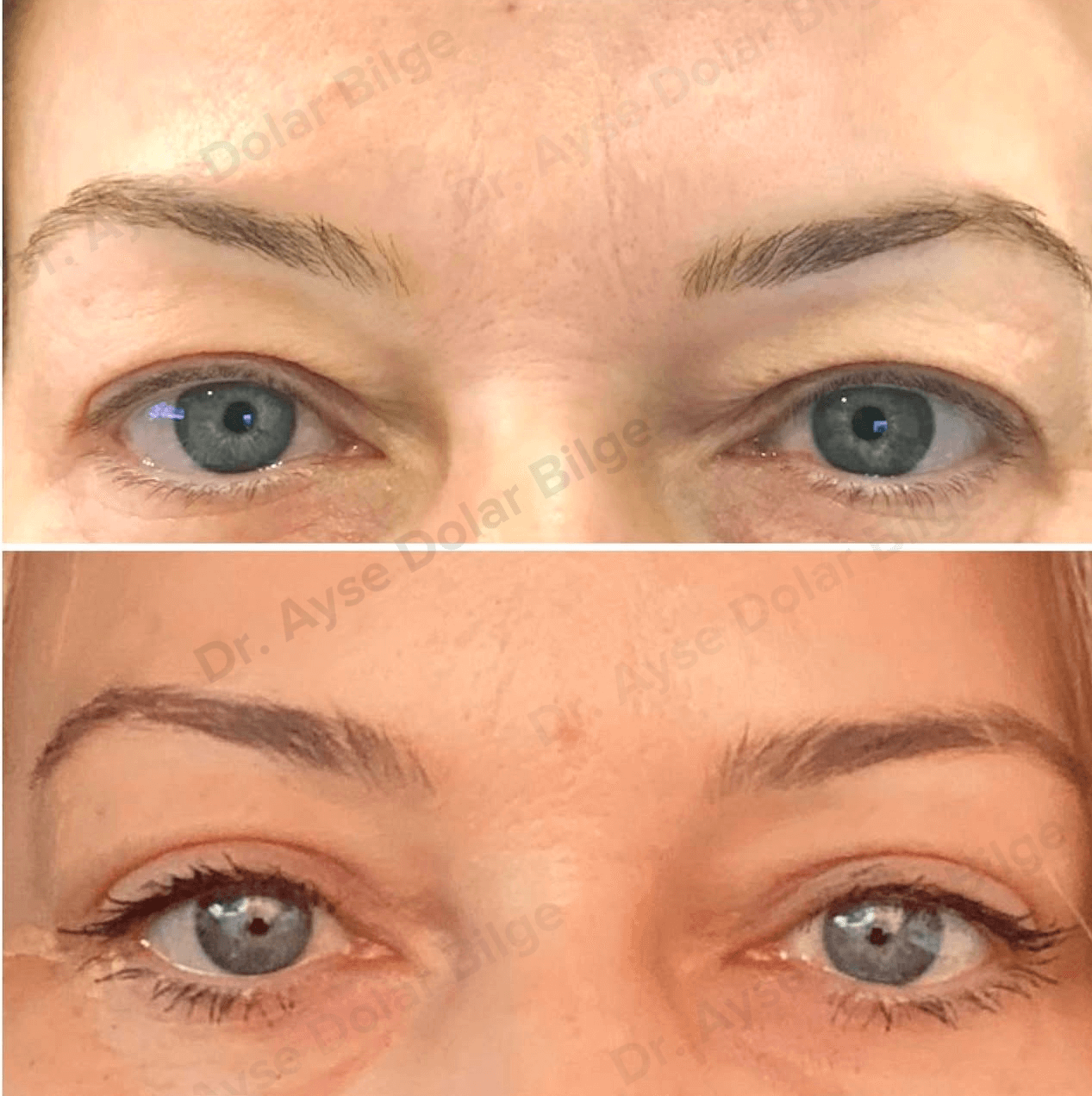
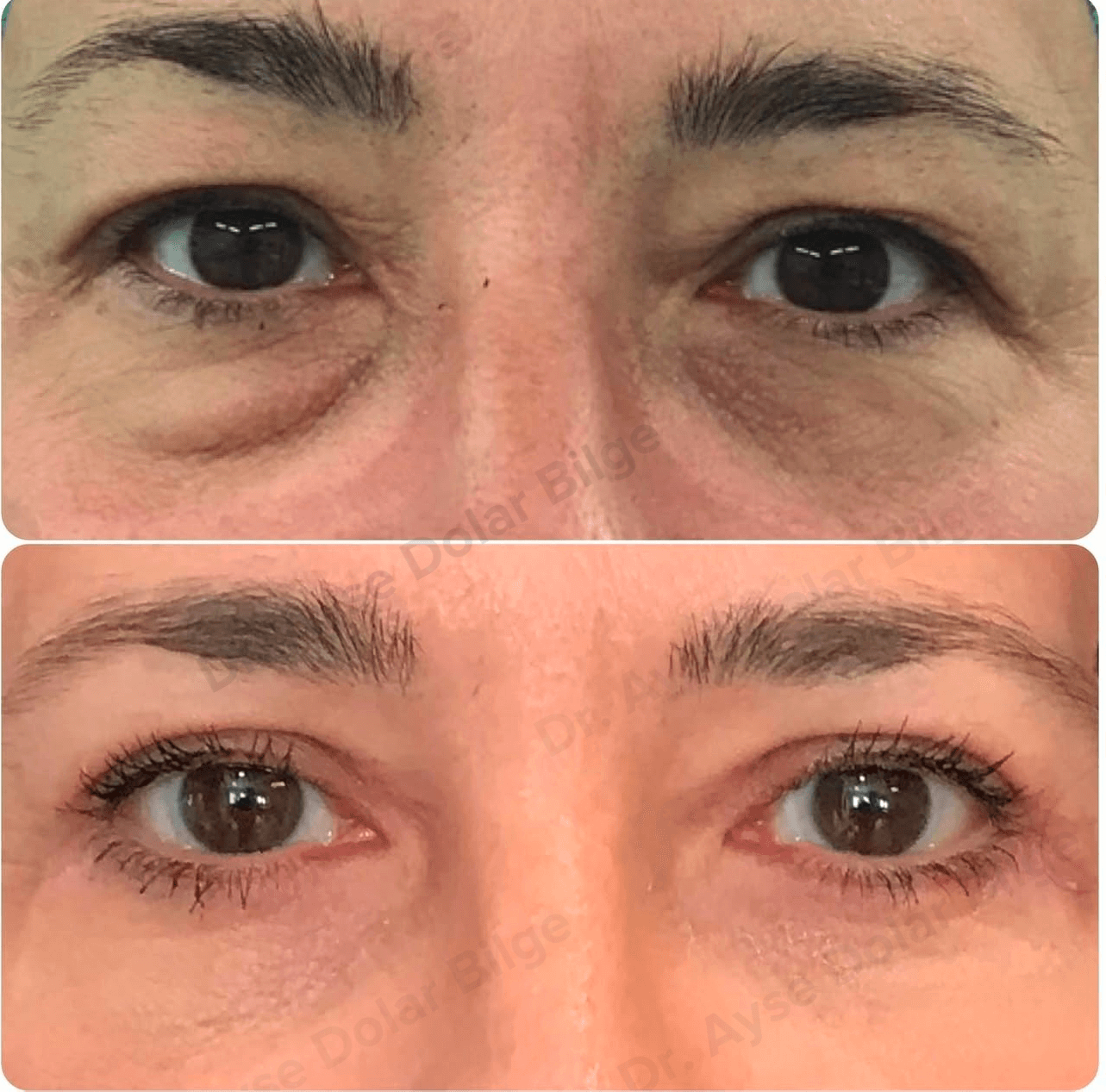
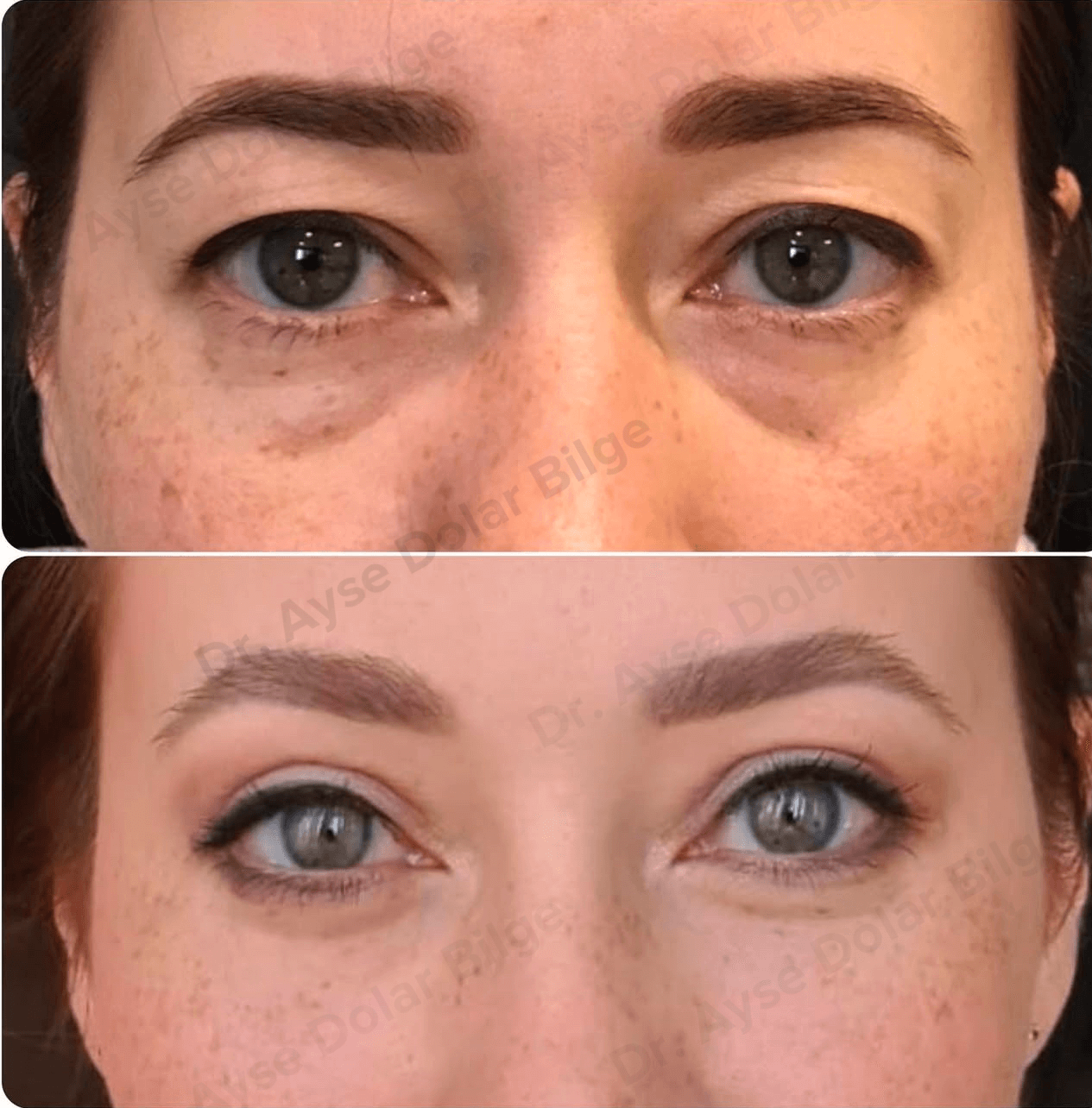
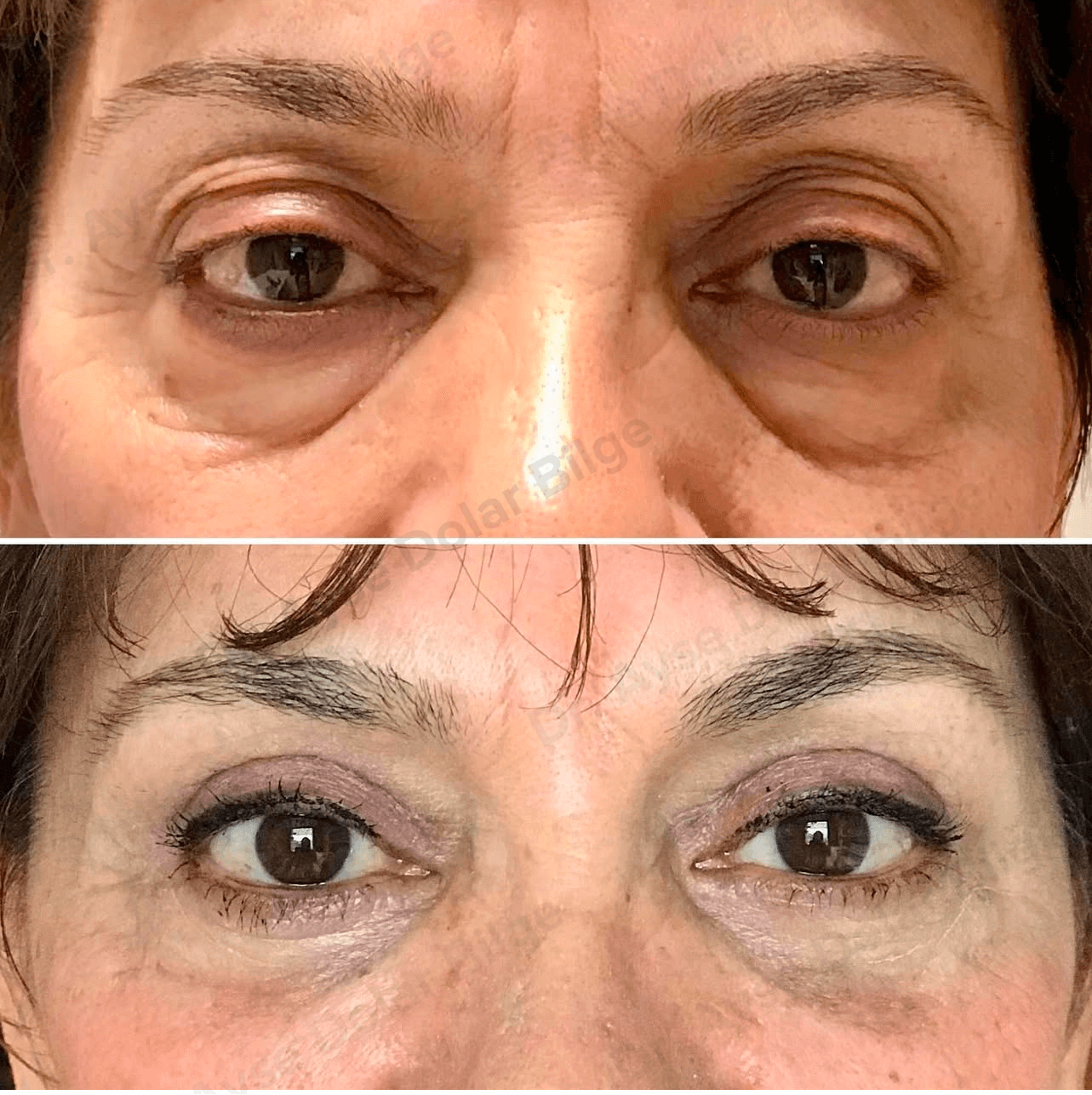
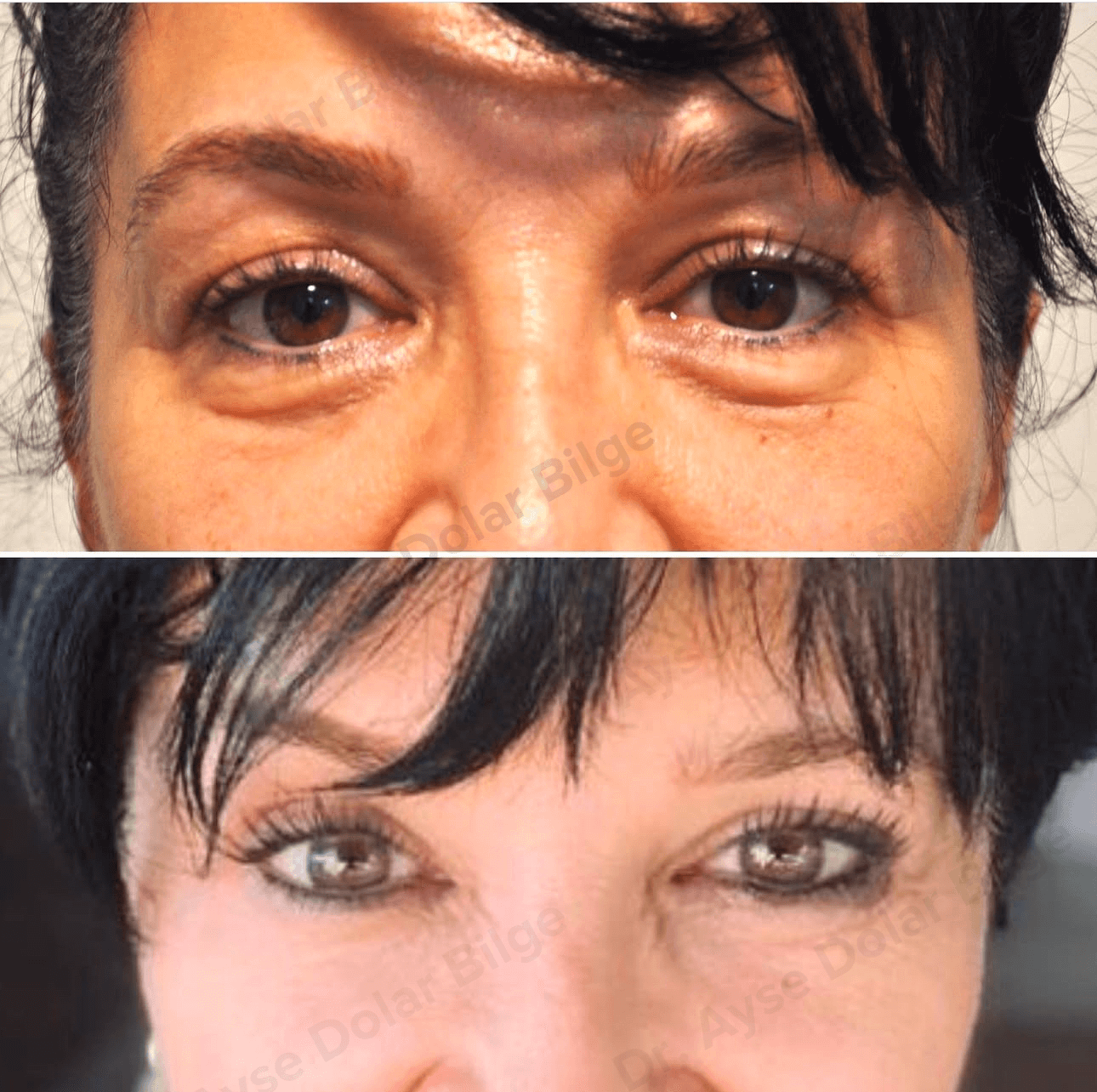
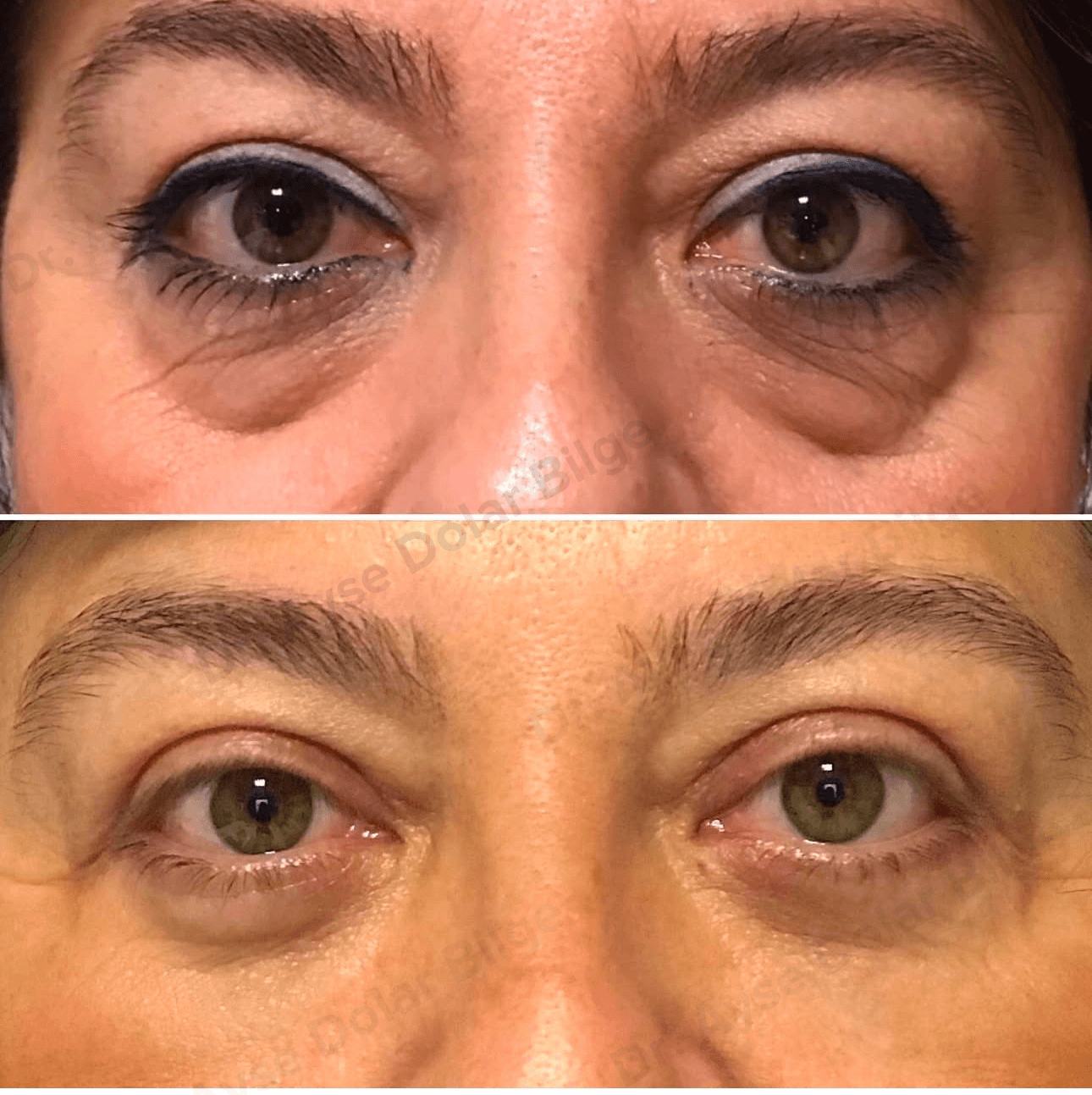
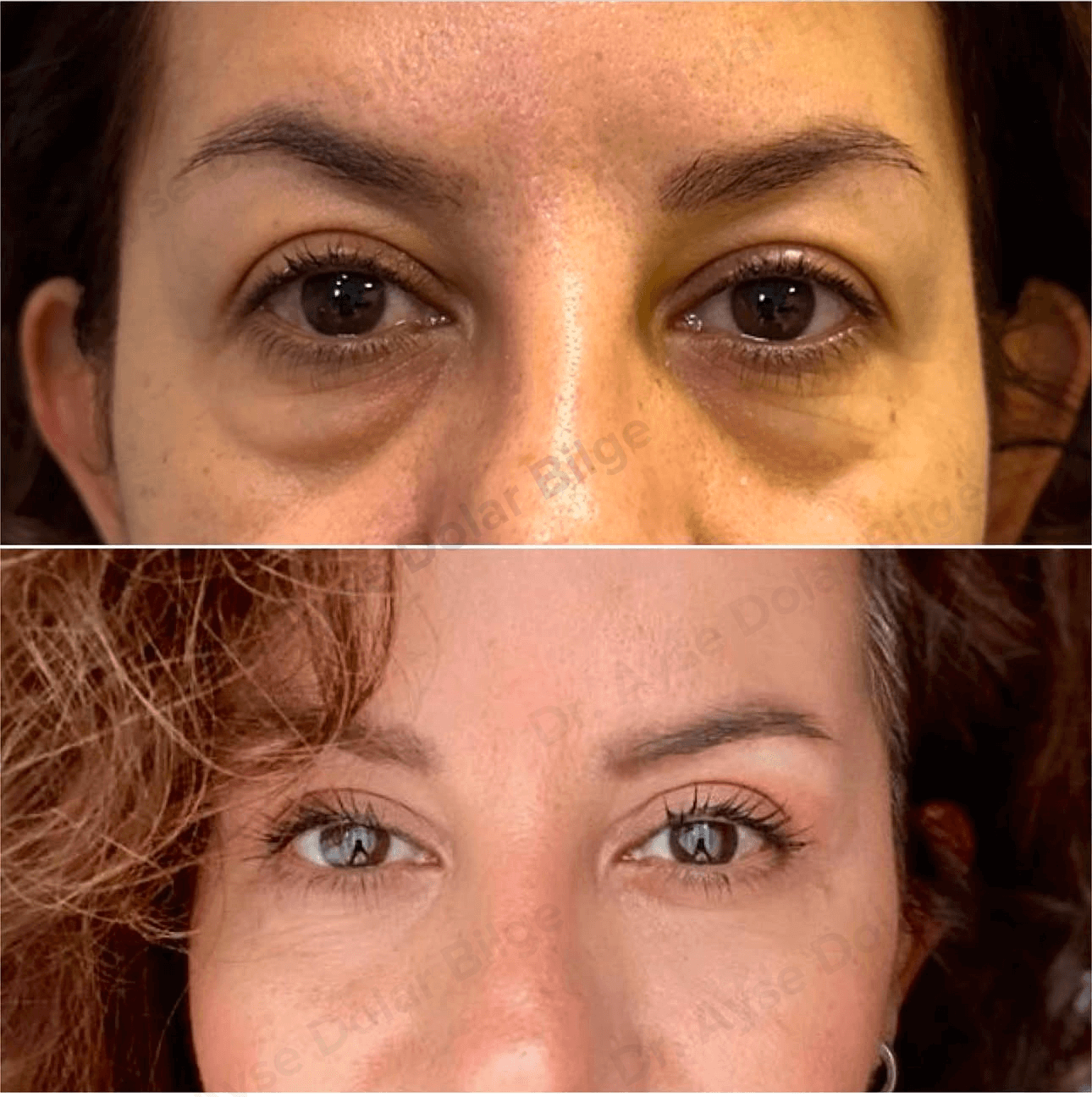
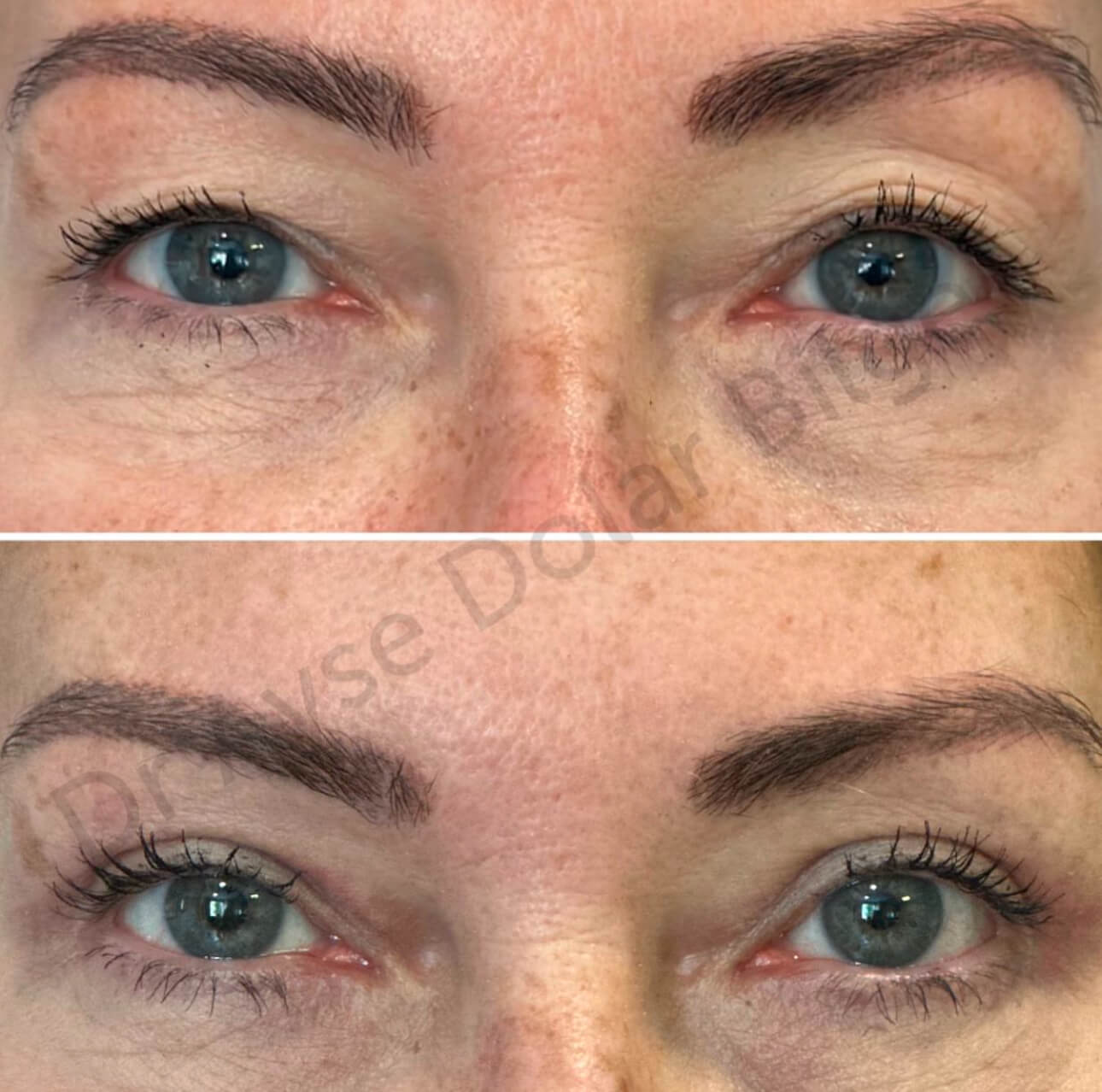
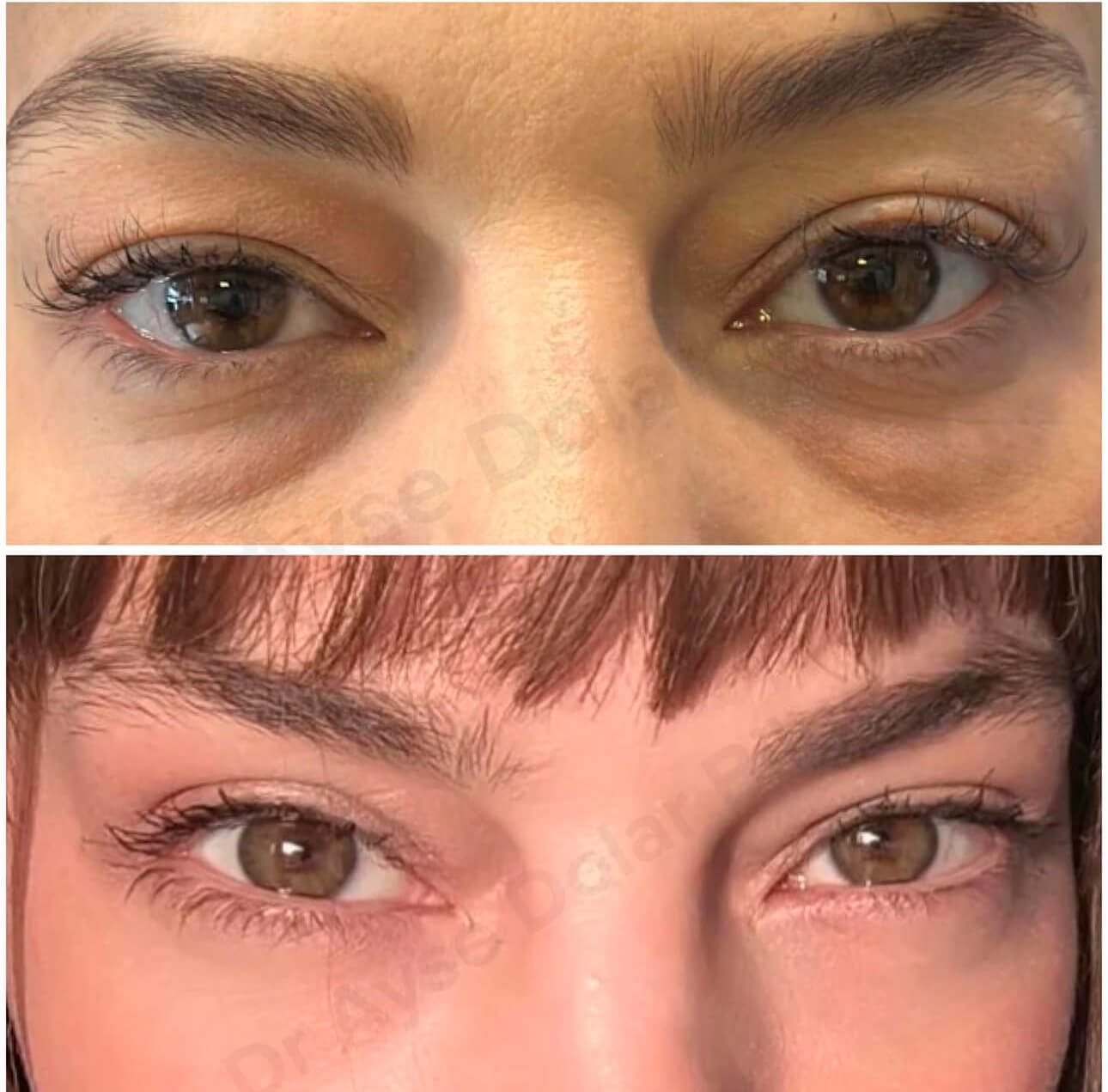
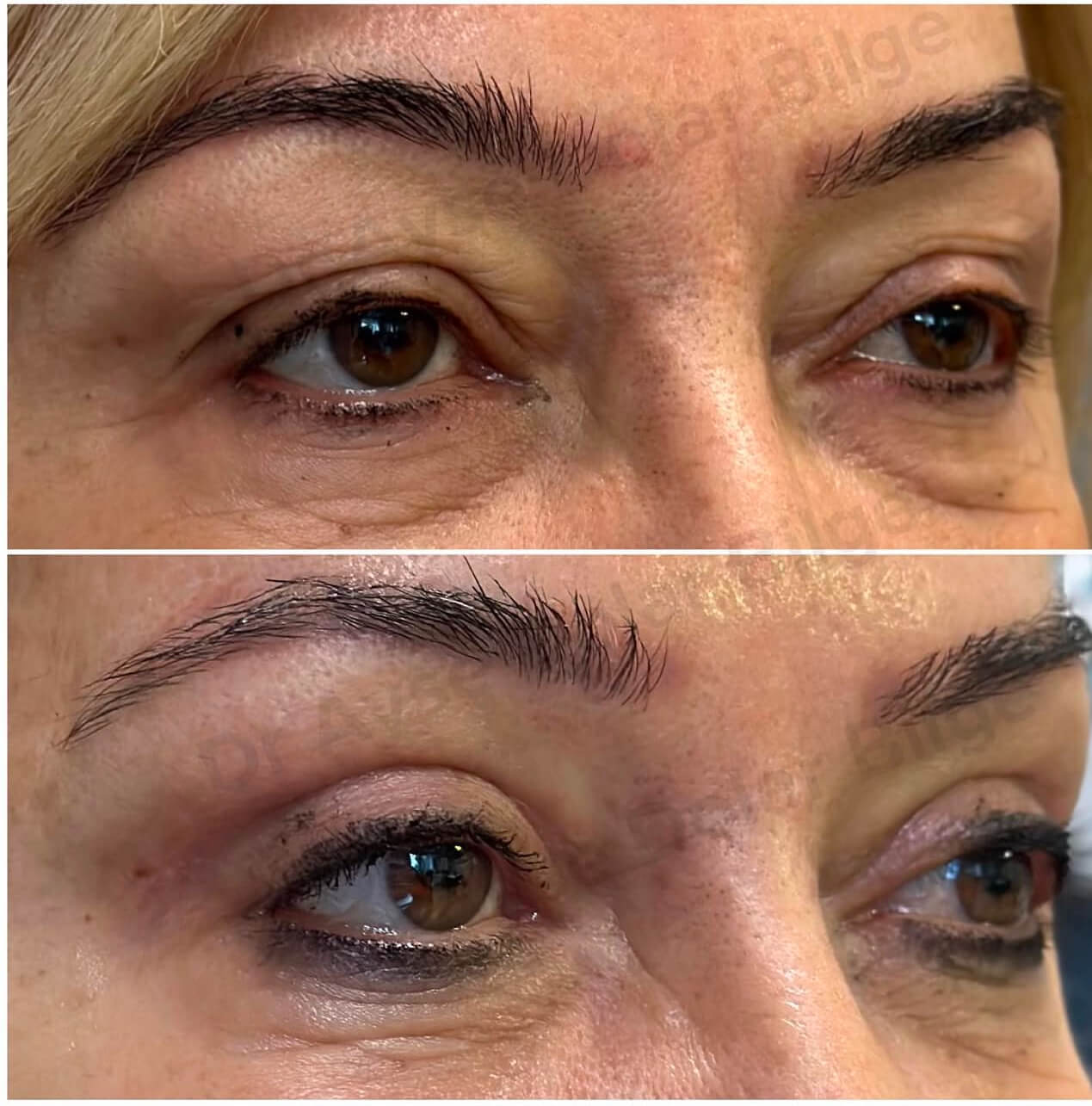
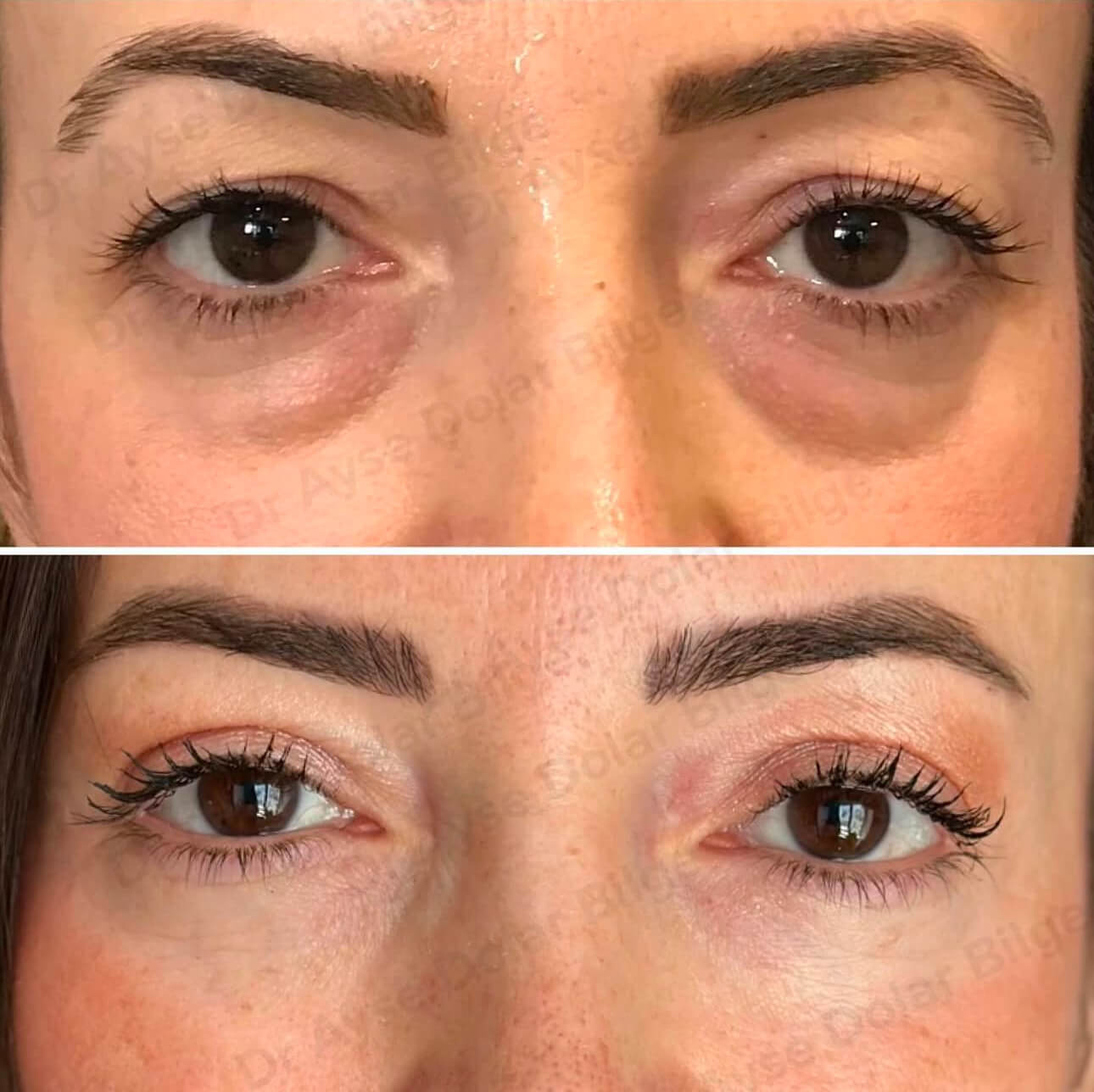
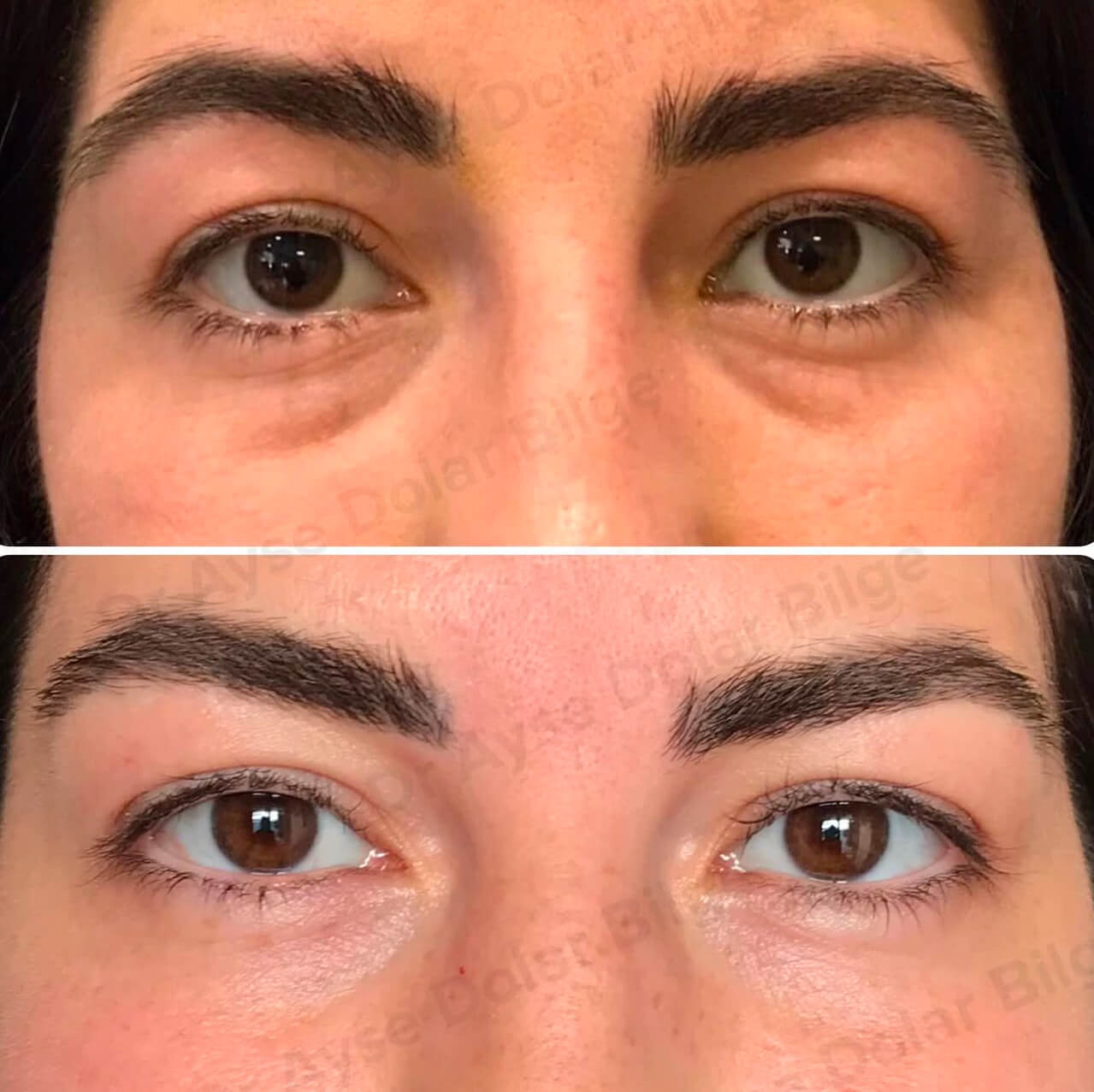
As an Ophthalmologist, Dr. Ayşe Dolar Bilge, I provide diagnosis and treatment services with my experienced team.
Swelling that is worse in the morning and eases during the day usually reflects fluid retention: salt intake, poor sleep, allergy, sinus disease and thyroid disorders are the main causes. A fullness that does not change through the day is caused by forward displacement of orbital fat. These are two different problems with different solutions.
Where puffiness comes from fluid retention, salt intake, sleep, allergy and thyroid status have to be addressed; no aesthetic procedure gives lasting benefit here. Where it comes from herniated fat, surgery is the only solution. Where the appearance is caused by hollowing and shadow, filler or fat injection may be appropriate.
This is the approach I recommend particularly in younger patients. If the only problem is under-eye bags, with no accompanying skin laxity or lid laxity, the operation is performed through a hidden incision behind the eyelid and no skin scar is left.
Where there is significant fat herniation, filler does not solve the problem; placing filler beneath a bag enlarges the fullness. Filler works in patients whose problem is hollowing and shadow rather than herniated fat. Treatment started without making this distinction makes the appearance worse.
Swelling and bruising peak in the first 48 hours, begin to recede from the third day, and have largely resolved within two weeks. Cold compresses and sleeping with the head elevated shorten this period. Lower lid healing takes longer than upper lid healing.
Firmness along the incision softens between the first and third month, and the under-eye contour settles in that period. The final result usually appears between three and six months. Judging the outcome before then is misleading.
Temporary swelling and bruising, dryness and asymmetry between the two sides can occur. The more significant risks are lower lid retraction and ectropion, which usually follow unrecognised lid laxity. Infection and bleeding are rare, and retrobulbar haemorrhage threatening vision is very rare.
Fat that has been removed or repositioned does not return, but the ageing process continues. Over time, skin laxity and volume loss can create a renewed sense of fullness. Puffiness caused by fluid retention continues independently of surgery.
To get detailed information, send us your contact information and we will call you as soon as possible. Contact us now
 English
