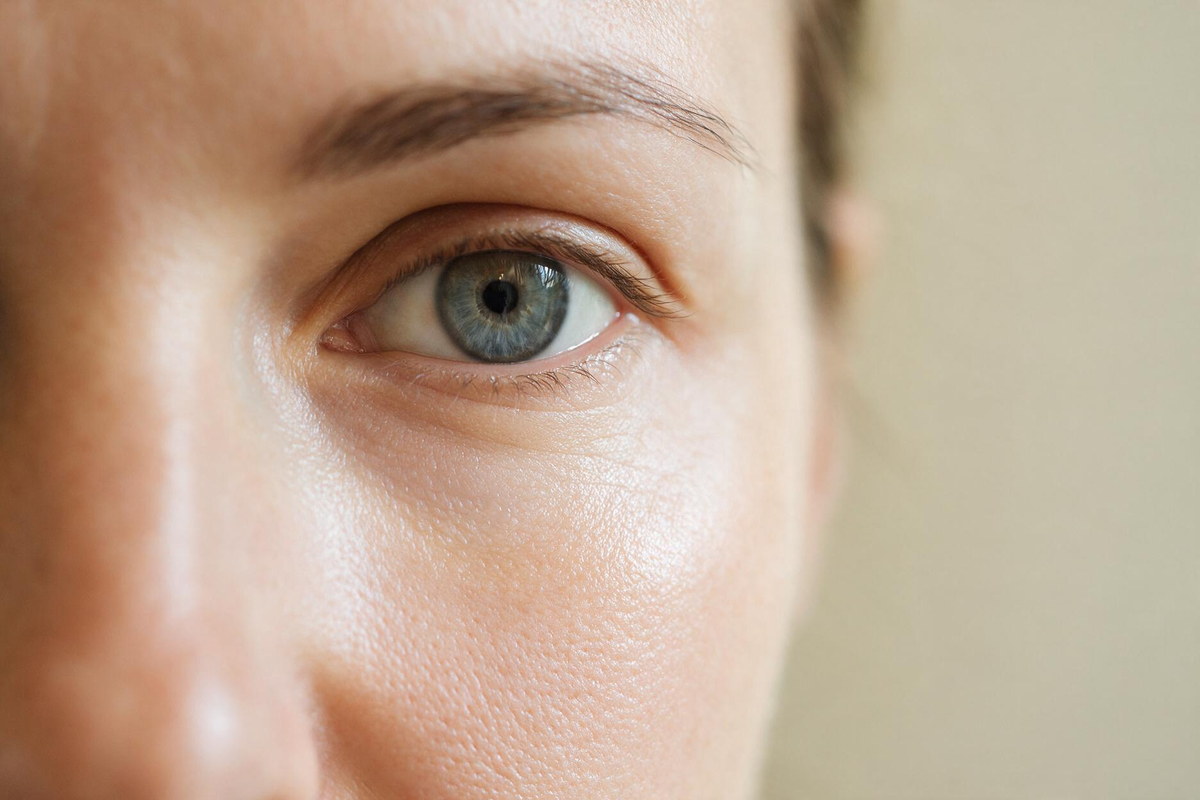
The under-eye hollow is one of the hardest areas of the face to treat well, and it is also the area where two very different treatments get discussed as if they were interchangeable. Patients arrive asking whether they should have nanofat or filler, as though it were a straight choice between two versions of the same thing. It is not. This article compares what nanofat actually does with what a hyaluronic acid filler does, where each one belongs, and where each one fails. If your question is whether you are a suitable candidate for an under-eye light filler in the first place, I have written about candidate selection separately in this article on who is and who is not a good candidate, and I will not repeat that ground here.
When someone says their under-eye area looks tired, the underlying cause is usually one of three things, or a mixture of them. There may be a genuine hollow, a groove along the orbital rim that casts a shadow. There may be a skin quality problem, where the skin is thin, crepey, dull or discoloured. Or there may be a bulge, with orbital fat pushing forward and creating a bag with a shadow beneath it.
Filler and nanofat answer different parts of that list. A hollow is a volume problem, poor skin quality is a tissue problem, and a bulge is neither: injecting anything into it tends to make it worse. Getting this triage right matters far more than choosing between products.
Nanofat starts as ordinary fat, harvested from a donor site through a small cannula. The difference is what happens afterwards. The fat is washed, pushed repeatedly between connectors until it emulsifies, then filtered. The result is a thin, oil-free fluid. The important point is that the mechanical processing destroys the fat cells themselves. What survives is the stromal vascular fraction, which contains adipose-derived regenerative cells and supporting elements.
So nanofat is not a filler made of fat. It is a tissue-quality treatment delivered by injection, placed very superficially into the dermis and just beneath it. Its aim is a change in skin texture, thickness and colour over months, not an immediate change in contour. I have described the technique in more detail in my page on nanofat injections.
A cross-linked hyaluronic acid gel does exactly one thing well: it occupies space. Placed correctly, deep and in small amounts along the orbital rim, it softens the groove so that light no longer falls into it as a shadow. The effect is immediate, which is part of its appeal, and it is measurable at the end of the appointment.
It also has a property no fat-based option shares. Hyaluronic acid can be dissolved with hyaluronidase. In the lower eyelid, where the skin is among the thinnest on the body and small errors show, having an exit route is a serious clinical advantage rather than a marketing footnote.
Filler goes wrong in predictable ways. Placed too superficially it produces a bluish-grey discolouration through the thin skin. Placed in too great a volume it creates a fullness that reads as puffiness rather than youth. In patients prone to fluid retention it can hold water and produce a swelling that lasts far longer than anyone expected, sometimes months. It can also be palpable as small irregularities. Rarely, but importantly, injected material can enter a vessel and compromise circulation in the territory that vessel supplies, which is why the periocular region demands anatomical caution.
Nanofat goes wrong differently. Because the result depends on a biological response rather than a volume of gel, it is slower and less predictable; some patients see a clear improvement in skin colour and texture, others a modest one. There is bruising, sometimes marked, and a donor site to recover from. And once it is in, it cannot be removed.
Between these two sits a third option that often gets lost in the conversation. Microfat is fat harvested and processed gently enough that intact fat cells survive, then injected in fine strands to add volume. Unlike nanofat, it does restore contour; unlike filler, it is your own tissue and there is no product to dissolve later. The trade-off is that a proportion of transferred fat is resorbed and the final volume is not fully known for several months. I discuss the technique on my page about microfat transfer.
Reading nanofat and microfat as the same treatment is a mistake I see often. They come from the same harvest and are prepared in completely different ways for completely different purposes.
In the short video below I explain how periocular fat injection works and why microfat and nanofat serve different purposes.
I start by separating shadow from pigment from bulge. Tilting the head, changing the direction of the light and gently stretching the skin will usually tell me how much of the darkness is a shadow that volume could correct. I also look at skin thickness and elasticity, lower lid support and laxity, any tendency to swell, thyroid, kidney or allergic conditions that change the picture, and what has already been injected into the area.
If the dominant finding is a shadow from a groove in someone with good skin and a supportive lower lid, a conservative volume approach is reasonable. If the dominant finding is thin, dull, discoloured skin over a reasonably well-supported rim, a regenerative approach makes more sense. If the dominant finding is a bulge, neither injection is the answer and we discuss surgical options instead.
Some under-eye changes are not aesthetic questions at all. Swelling that appears suddenly on one side, pain, redness, fever, double vision, restricted eye movement or any reduction in vision needs prompt medical assessment rather than a cosmetic consultation. Generalised puffiness that is worse in the morning, particularly with swelling elsewhere in the body, may point to a systemic cause worth investigating.
For everything else, my advice is simple: understand the cause before choosing the treatment. The under-eye area punishes guesswork, and an examination by a surgeon who works with eyelid anatomy every day will tell you not only which option might suit you but also which options to leave alone.
Nanofat is your own fat that has been harvested, washed and then mechanically emulsified and filtered until the fat cells themselves no longer survive. What remains is a fluid rich in the stromal vascular fraction, including regenerative cells. It is used to improve skin quality rather than to add volume.
No, and this is the most common misunderstanding. Nanofat contains almost no intact fat cells, so it adds very little volume. If your under-eye problem is a true hollow that casts a shadow, nanofat alone will not fill it. Volume needs either a hyaluronic acid filler or a thicker fat preparation such as microfat.
They do not fade in the same way. A hyaluronic acid filler is gradually broken down and its volume effect recedes over a period usually measured in months up to about a year. Nanofat is not a volume effect at all; when it works, the change in skin colour and texture develops slowly over several months and tends to persist, though results vary from person to person.
No. Hyaluronic acid filler can be dissolved with hyaluronidase, which is a real safety advantage in the lower eyelid. Nanofat is your own tissue and there is no reversal agent. That difference matters more in the under-eye area than almost anywhere else on the face.
It is small, but it is still a procedure. Fat is taken from a donor site, usually the inner thigh or abdomen, through a fine cannula. Expect bruising and tenderness there, and a longer downtime than a simple injection appointment.
Often that is the sensible plan. Volume and skin quality are separate problems, and treating one does not fix the other. In practice I decide during the examination whether a case needs volume, needs skin quality, or needs both addressed in the same session.
When hyaluronic acid gel sits too superficially under very thin eyelid skin, it scatters light and produces a bluish-grey tint, an effect described as the Tyndall phenomenon. It is one of the situations where the ability to dissolve the product is genuinely useful.
 English
