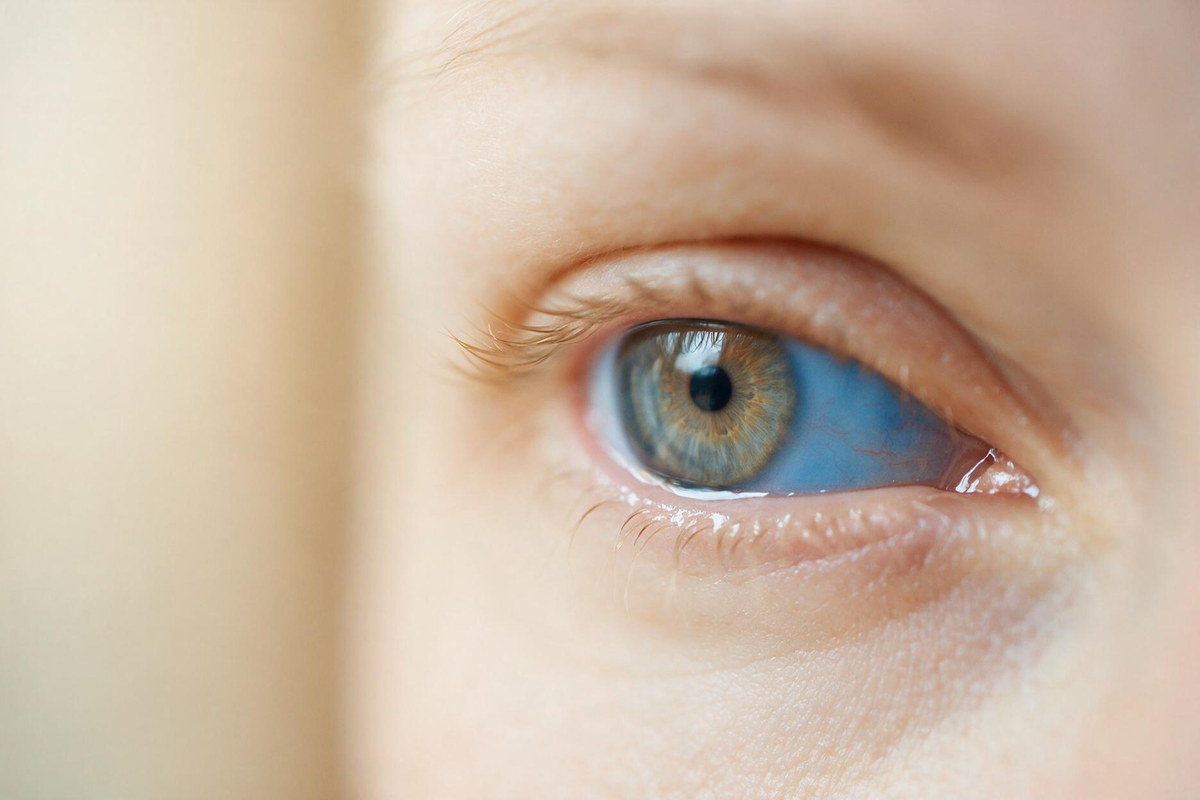
The answer to why eyes water is more interesting than it looks. In a large share of watery eyes the problem is not that too many tears are made, but that they cannot drain away. The tap is fine; the plughole is blocked. And in another group of patients the watering is caused, of all things, by dryness. Here I explain where tears go, how I separate overproduction from obstruction, what watering in one eye means, why babies are a different case, and which tests answer the question.
The tear film has three layers: oil from the glands along the lid margin, the watery layer beneath it, and a mucin layer that lets the film cling to the surface. If any one is disturbed, the film becomes unstable.
Drainage works like this. Every blink spreads tears across the surface and sweeps them towards the inner corner. They enter two tiny openings in the lid margins called puncta, pass through short canaliculi into the tear sac, then down a duct that opens inside the nose. That is why your nose runs when you cry.
A narrowing anywhere along that route, or a lid margin sitting in the wrong position, will make the eye overflow even when production is entirely normal. The medical term for that overflow is epiphora.
This is the first distinction I make, because the treatments have nothing in common.
Overproduction answers something irritating the surface: a foreign body, an inturned lash, lid inflammation, allergy, conjunctivitis, dry eye. Drainage is intact but the eye is asked to produce more, so the watering fluctuates, arriving with the trigger and settling afterwards.
A drainage problem is steadier. The eye overflows even indoors and out of the wind, the lashes stick together on waking, and there may be discharge from the inner corner, sometimes only when it is pressed. In adults the commonest cause is narrowing or blockage of the tear duct, which I cover on the adult nasolacrimal duct obstruction page.
There is a third group. When the lid margin turns outward the punctum no longer touches the eye and tears cannot be taken up; when it turns inward the lashes rub the cornea and production rises. In older patients this is the most frequently missed cause of watering.
One-sided watering points towards something structural. My order of suspicion: narrowing of that eye's tear duct, a lid margin out of position, an inturned lash, or a one-sided source of surface irritation.
If watering in one eye comes with swelling and redness at the inner corner and discharge on pressure, that is infection of the tear sac and should not be left. With fever or spreading redness it needs assessment the same day.
Persistent one-sided watering that has not responded to treatment deserves a proper look for other causes of obstruction along the duct.
This sounds contradictory and it is one of the things I explain most often. When the ocular surface dries and becomes irritated, a reflex burst of tears is triggered. That reflex tear is watery and poor in quality; it will not cling to the surface, so it spills over the lid. The person ends up with dryness and constant watering at once.
The clue is what accompanies it: stinging, burning, a gritty sensation, worse in front of a screen and worse towards evening. Dysfunction of the oil glands in the lid margin usually goes with it. I set out the reasoning and the approach on the dry eye disease page.
In allergic conjunctivitis the leading symptom is itch, with watering alongside it. Seasonal fluctuation, sneezing and a runny nose complete the picture. Rubbing gives brief relief but increases irritation and prolongs the watering.
Cold air and wind increase evaporation and narrow the drainage route, which is why watering is worse outdoors; air conditioning and heating do something similar. In front of a screen our blink rate falls by up to half, and the result is often experienced as a watery eye rather than a dry one.
Babies are a different case. In a substantial proportion of newborns a thin membrane remains at the lower end of the tear duct where it enters the nose. The result is constant watering from the first weeks of life and lashes stuck together in the morning.
Most of these open on their own within the first year. Meanwhile I show parents how to massage over the tear sac and keep the lids clean. Where it does not resolve, procedures such as probing come into the discussion and the timing is decided with the doctor. I go through this on the congenital nasolacrimal duct obstruction page.
Do not wait if the inner corner is red and swollen with purulent discharge, or if the baby is febrile. And if the eye looks large, the baby is very uncomfortable in light and the cornea appears hazy, the watering points to something quite different and needs urgent assessment.
The assessment is simpler than most people expect and takes a few minutes:
Without these, most drops prescribed for watering are wasted, because a drop does nothing for a blocked duct.
Brief watering in wind or cold that settles by itself is nothing to worry about. See an ophthalmologist if:
Watering is the complaint people postpone as trivial. Once the cause is correctly identified most of it can be dealt with; the time that gets lost is spent trying drops without knowing what is wrong.
The commonest causes are narrowing of the tear duct, dry eye disease, allergic conjunctivitis, blepharitis and lid margins that have turned inward or outward. Less often the tear sac is infected. Examination separates them.
One-sided watering suggests something structural: an obstructed tear duct on that side, a lid margin out of position, an inturned lash or local surface irritation. Swelling and discharge at the inner corner mean the tear sac is involved and should be seen promptly.
It depends on the cause. Watering from allergy or surface irritation settles when the trigger is removed; watering from dry eye needs the ocular surface supported. Where the duct is obstructed, drops will not be enough and the drainage route itself has to be addressed.
Yes, and it is common. When the surface dries and becomes irritated, a reflex burst of watery, poor-quality tears is produced. It cannot cling to the surface, so it spills over the lid. The person experiences dryness and watering at the same time.
In newborns the usual reason is a membrane that has not opened at the lower end of the tear duct, and most of these resolve within the first year. Massage over the tear sac and lid hygiene are advised meanwhile. Purulent discharge, fever or marked light sensitivity need to be seen without delay.
With age the lid tissue loosens, the margin may turn inward or outward, and the punctum no longer sits against the eye. Narrowing of the tear duct and a poorer quality tear film are added to that. These three often occur together.
 English
