
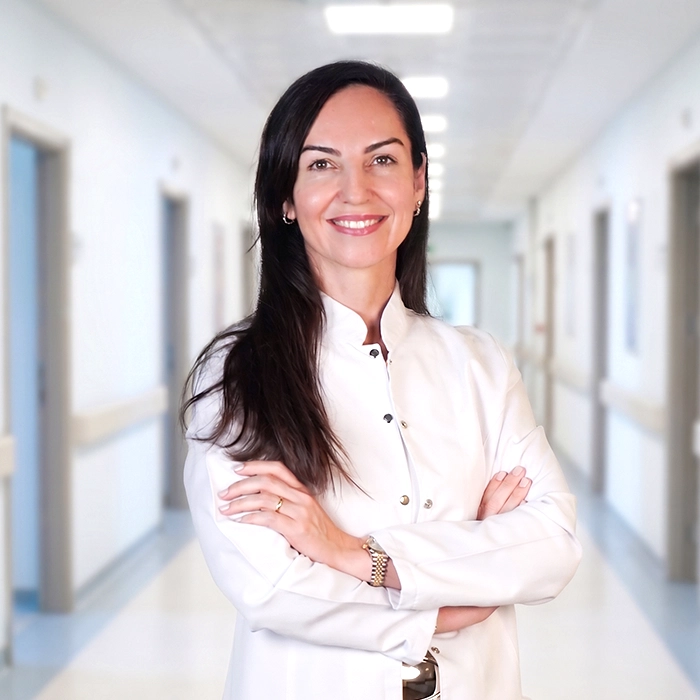
This page holds the diplomas, certificates and authorisation documents behind my training and qualification. The abbreviations on them rarely mean anything to a patient, so each one is explained briefly below.
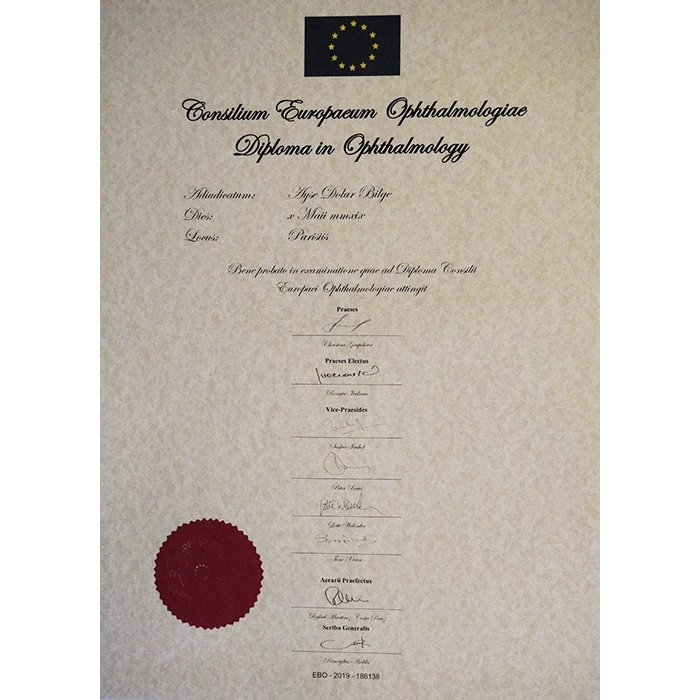
FEBO (Fellow of the European Board of Ophthalmology) is the diploma awarded to doctors who pass the examination held by the European Board of Ophthalmology. It has both a theoretical and a clinical assessment section and defines a common standard of knowledge for ophthalmology across Europe. It is not compulsory in order to practise as an ophthalmologist in Turkey; it is an examination a doctor chooses to sit. For me it is a way of measuring where I stand against the standard held by colleagues across Europe.
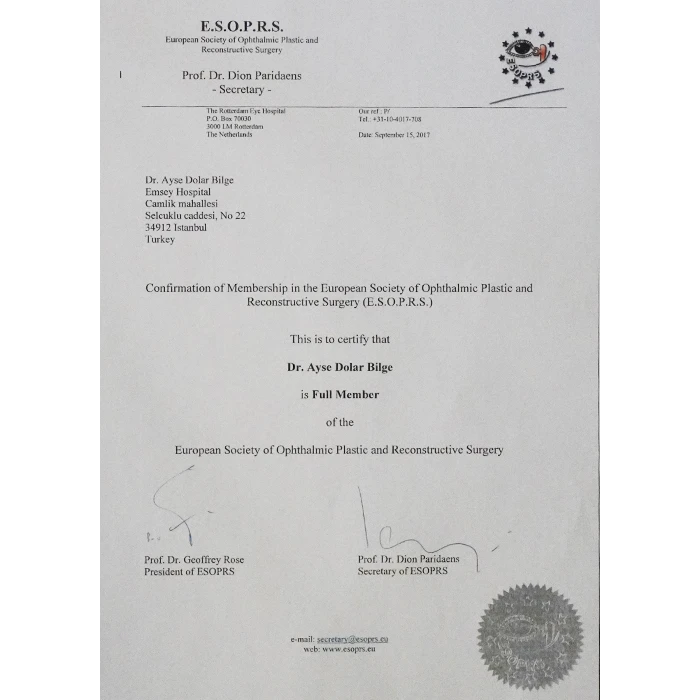
ESOPRS is the Europe-wide professional society for doctors working in eyelid, orbital and lacrimal surgery. I am an active member. Its annual meetings are one of the places where new techniques and complication series in oculoplastic surgery are discussed. Being able to compare your own results with those of other centres has a direct effect on which technique you choose for which patient.
The Turkish Ophthalmological Association (TOD) is the professional body of ophthalmologists in Turkey and is divided into units by subspecialty. I am an active member of the Oculoplastic Surgery Unit, which runs the standards, training programmes and courses for oculoplastic surgery in the country.
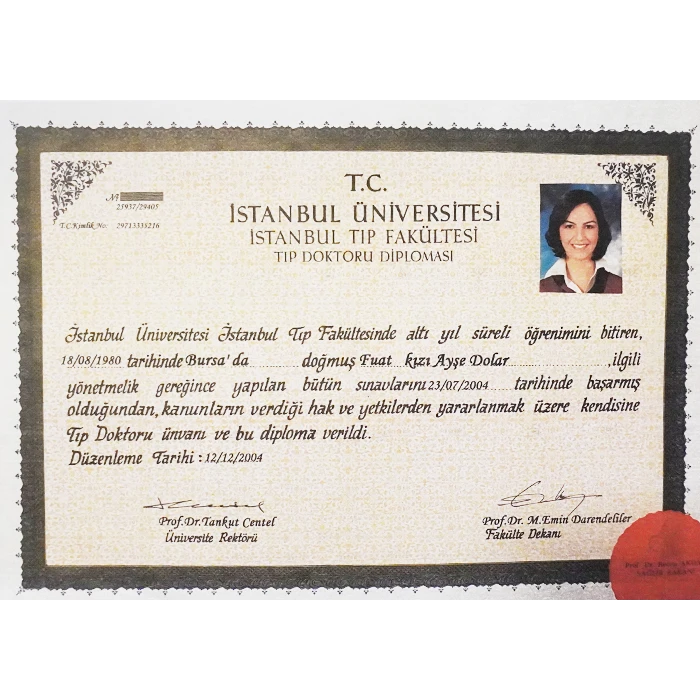
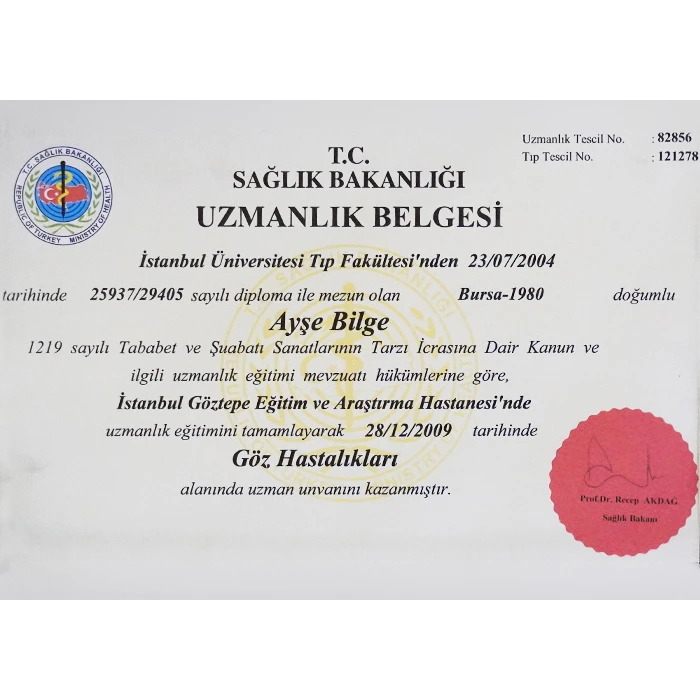
I received my medical diploma from Istanbul Faculty of Medicine in 2004, and my specialist certificate in ophthalmology in 2009 at the end of my residency at Istanbul Göztepe Training and Research Hospital. The year-by-year record of my training is on my resume page.
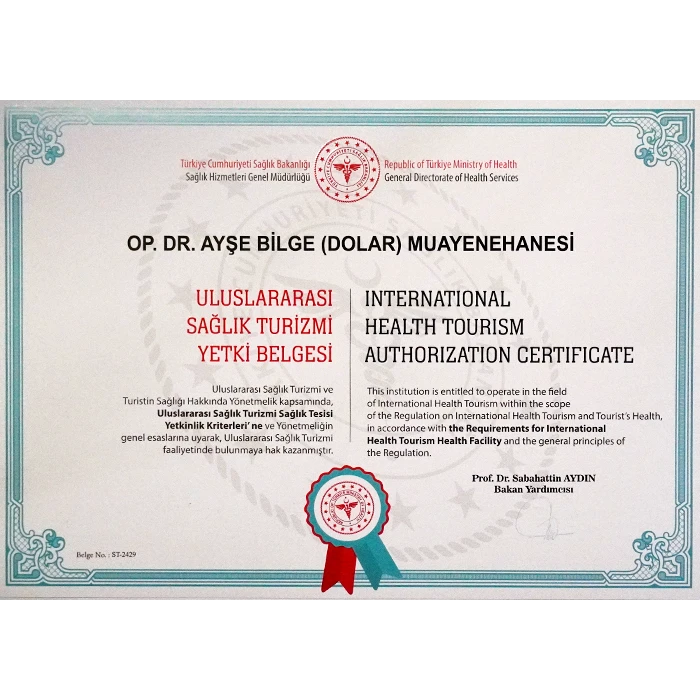
The Turkish Ministry of Health issues a separate authorisation for institutions and doctors who treat patients coming from abroad. The Health Tourism Authorisation Certificate is the document issued under that framework. For patients travelling from other countries it means the process runs within a structure defined by the Ministry.
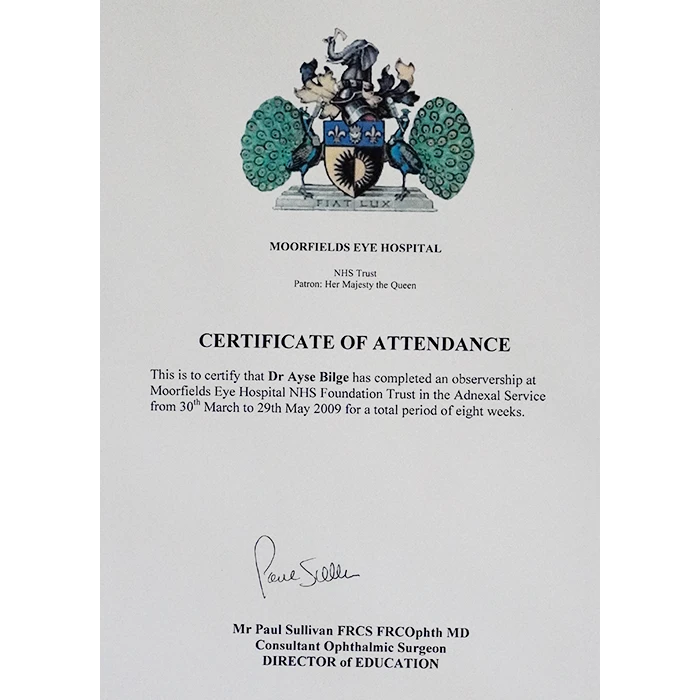
Oculoplastic surgery does not stand still: the materials used, the surgical approaches and the management of complications change regularly. This is why I continue to attend national and international courses, congresses and live surgery sessions. The attendance certificates on this page belong to part of that training.
A certificate shows that a defined course of training was completed and that an examination or assessment was passed. On its own, no document predicts the outcome in an individual patient; a surgical result depends on the patient's anatomy, the stage of the condition and a correct indication. What these documents give is a traceable record of where my knowledge comes from and who verified it. How I work is described on the about me page, and my academic work on the scientific publications page.
As an Ophthalmologist, Dr. Ayşe Dolar Bilge, I provide diagnosis and treatment services with my experienced team.
To get detailed information, send us your contact information and we will call you as soon as possible. Contact us now
 English
