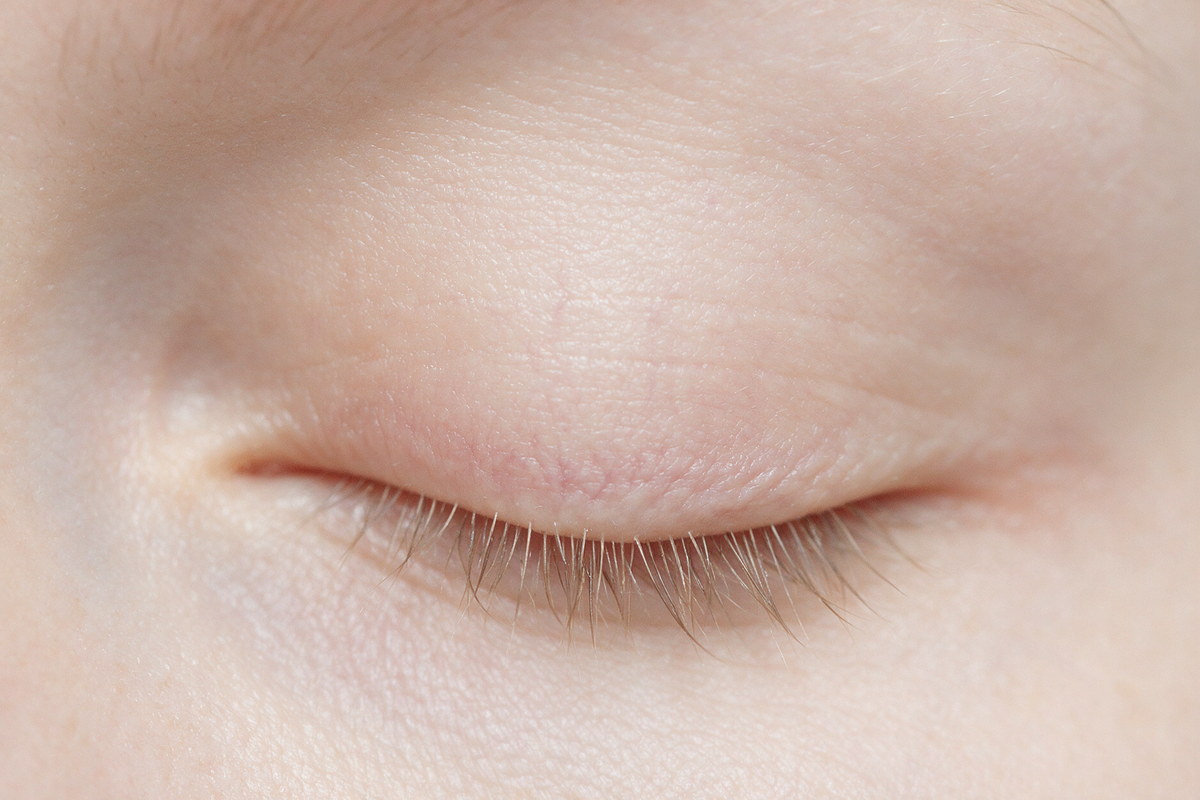
"My eyelids are itchy, dry and flaking, and it has been going on for weeks." I hear this from patients most often when the weather turns cold, and the cause is frequently eyelid dermatitis. It is an inflammation of the skin of the lids, and because that skin is so thin, it reacts earlier and more strongly than skin elsewhere. This article explains what eyelid dermatitis looks like, the contact, atopic and seborrhoeic types, why the eyelid skin reacts first, how it overlaps with blepharitis and allergy, what winter dryness does, what to avoid on the lids, why treatment is a doctor's decision and when to seek an examination.
The skin of the lids becomes red or pink, dry and rough. It may flake, feel tight and itch, sometimes with small fine cracks or a slightly swollen look. In some people the lids appear darker or thickened after months of rubbing. It can affect one or both eyes and may extend to the skin beneath the eyes or to the brow.
The eye itself is usually calm, and vision is not affected. If the white of the eye is red, painful or blurred, the problem lies somewhere other than the lid skin.
Doctors usually separate eyelid dermatitis into three common types. Contact dermatitis is a reaction to something that touches the skin: cosmetics, cleansers, hair products carried to the eyes by the hands, nail products, fragrances or preservatives in eye drops. Allergic contact reactions can appear several days after exposure, which makes the culprit hard to spot. Irritant contact dermatitis comes from products or conditions that simply wear down the skin barrier, such as harsh cleansing, wind and cold.
Atopic dermatitis, or eczema, occurs in people who often have a personal or family history of eczema, hay fever or asthma. The lids may be the only place affected. Seborrhoeic dermatitis causes greasy, yellowish scale along the lash line and brow and often appears together with dandruff of the scalp. Identifying the type matters, because the approach differs.
Eyelid skin is far thinner than skin on the cheek or forearm, has very little fat beneath it and is in constant movement with every blink. The barrier is easily disturbed. We also touch the eyes more than any other part of the face, so substances from fingers, hair and clothing reach the lids repeatedly. A product that causes no trouble on the cheeks can inflame the lids.
Rubbing worsens the cycle: itching leads to rubbing, rubbing damages the skin, and the damaged skin itches more. Breaking that cycle is a large part of the management.
Several conditions look alike at the lid margin. Blepharitis is inflammation of the edge of the lid where the lashes grow, with crusting, burning and redness. It can coexist with dermatitis, or be mistaken for it. Our page on blepharitis explains how the condition is recognised. Allergic conjunctivitis causes itching and watery eyes with a pink eye, and it often accompanies seasonal allergy; you can read about it on the page on allergic conjunctivitis.
When the lid skin, the lid margin and the eye surface are all involved, the diagnosis needs an examination under magnification. Treating one part and missing the others is a common reason for symptoms that keep returning.
Cold air, wind, indoor heating and long hot showers dry out the skin barrier. Many patients find that mild dermatitis flares from late autumn and settles in summer. Hot, dry rooms and rubbing the eyes in dry air add to it, as do scarves, wool and some face masks that rest against the lids. Stress and poor sleep appear to make flares more likely in people prone to eczema.
Paying attention to what has changed in your routine over the last few weeks, such as a new product, new pillow cover or new medicine, often points toward the trigger.
Mild fragrance-free moisturiser and gentle cleansing are generally sensible, but anything beyond that should follow advice from a doctor.
Treatment depends on the type, the severity and whether the eye surface is also involved. Finding and removing the trigger is the first step. Some patients need a prescribed anti-inflammatory preparation for a limited time, and others need lid hygiene for blepharitis or tests to find an allergen. Because the skin near the eye is delicate and some preparations can affect the eye if used for long, the choice and the length of treatment are decided by the examining doctor. A stubborn eyelid rash that does not respond is sometimes referred on for skin testing.
Mild dryness for a few days after a clear trigger can be watched. Please arrange an examination if:
Rapid swelling of the lids with fever, pain on moving the eye or reduced vision should be treated as an emergency, and you should attend a hospital the same day. Our page on eyelid diseases gives a broader overview of lid conditions.
The common causes are contact reactions to cosmetics and other products, atopic eczema, and seborrhoeic dermatitis. Wind, cold and dry indoor air make the thin skin of the lids react more easily.
Itching and flaking usually point to dermatitis or irritation of the lid skin, but blepharitis or allergy can look the same. An eye examination separates them, which matters because treatment differs.
No. Eczema and other forms of dermatitis are not infections and cannot be passed on. Infections of the lid look different and can come with pain, discharge or fever.
Yes. Allergic contact reactions and allergic conjunctivitis can cause lid swelling and itching. A new cosmetic or hair product is a frequent culprit, and symptoms may appear days after exposure.
Mild irritation can settle within days once the trigger is removed. Atopic or seborrhoeic types tend to come and go and may need ongoing care. Symptoms lasting over two weeks should be examined.
Not without medical advice. Lid skin is very thin, and steroid preparations near the eye need supervision because of possible effects on the skin and the eye. Your doctor will decide what is suitable.
No, but they overlap. Blepharitis affects the lid margin where lashes grow, while dermatitis affects the lid skin. They can occur together, which is why a full lid examination is useful.
 English
