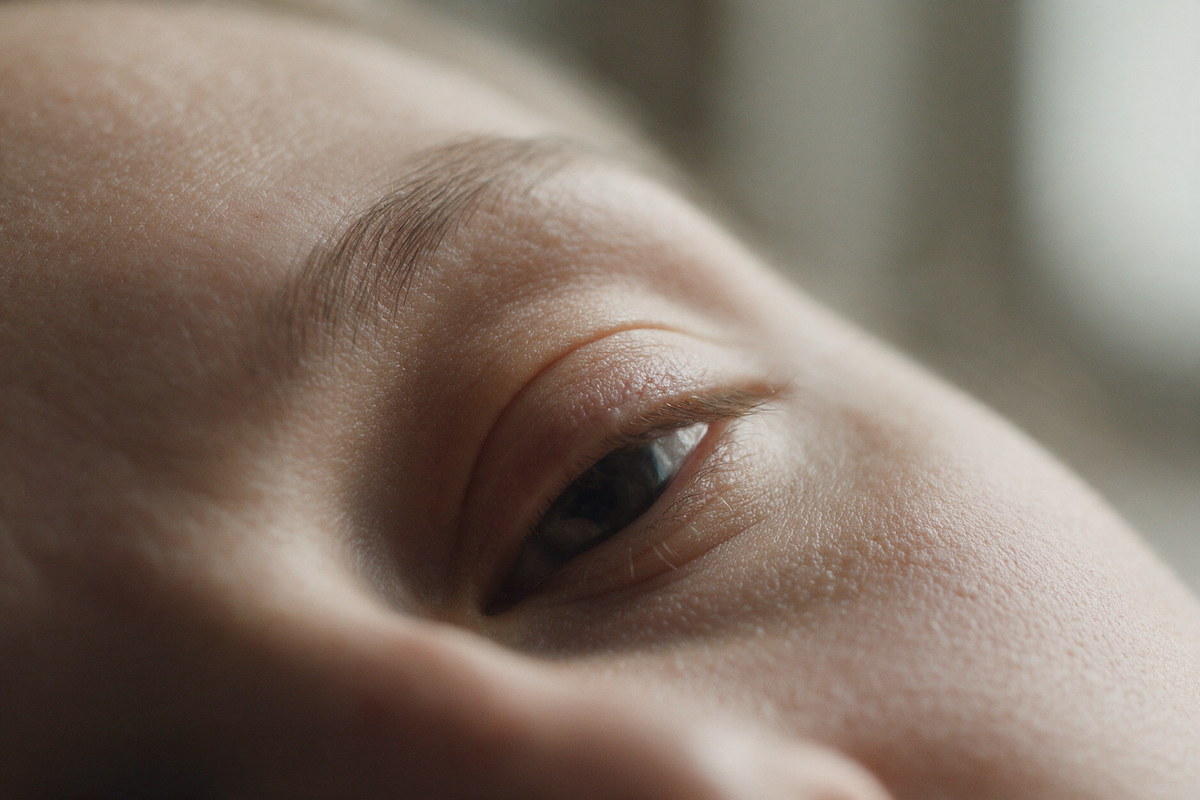
"My eyes look sunken and tired, and I cannot work out why." In my clinic this concern comes up in several different ways. For some people the upper lid looks hollow and the brow bone looks prominent. For others it is a deep groove beneath the eye. A small group has a real change in the position of the eye itself. This article explains the difference between sunken eyes, sunken lids and a hollow under the eye, the role of fat loss and ageing, how weight loss, sleep and dehydration play a part, what enophthalmos is, the upper lid sulcus, tear trough anatomy, the general non-surgical and surgical approaches, and when to see an eye doctor.
People use "sunken eyes" for three different things. First, the eye globe itself may sit slightly further back in the socket, which is called enophthalmos. This is uncommon and has a medical cause. Second, the upper lid may look hollow because fat and volume are lost from the area above the eyeball, deepening the crease beneath the brow. Third, the area under the eye may appear hollow, with a groove running from the inner corner downwards, known as the tear trough.
Telling these apart is the first step, because the causes and the options are different. A mirror cannot always distinguish them, and a clinical examination, sometimes with measurements, settles which one applies.
The skin and soft tissues around the eyes change with time. The fat pads around the eye become thinner, the skin loses elasticity, and the bone beneath becomes more prominent as it gradually changes shape. Together these deepen the hollows of the upper lid and the area beneath the eye, and the face can look tired even when you feel well.
Genetics also matters. Some people have naturally deep-set eyes or a prominent brow from early adulthood, and family resemblance is often obvious. Such features are not a disease.
Quite rapid weight loss reduces the volume of fat in the face, including around the eyes, and the lids may look hollow as a result. Poor sleep and dehydration can make the skin look thin, dull and shadowed beneath the eye, but they do not change the structure itself. The effect is usually temporary and improves with rest and fluids.
Long-term illness, smoking, heavy sun exposure and some medical treatments can also alter the look of the lids. When the change is quick and not clearly linked to weight or sleep, it deserves a medical review rather than a cosmetic answer.
Enophthalmos means that the eyeball sits deeper in the socket than normal. It can follow an injury, such as a fracture of the bone floor of the orbit, where the socket enlarges and the tissues sink. It can also result from some diseases, previous surgery or a shrinking of the tissue behind the eye. It is often accompanied by a lower lid that sits differently and by changes in eye movement.
This is a medical question before it is a cosmetic one. If one eye looks newly sunken, particularly after a blow to the face, with double vision or a change in the position of the lid, an examination is needed to find the cause. The difference between the two eyes is measured with a simple instrument in the clinic, and scans may be requested.
The upper lid sulcus is the natural crease between the eyelid and the brow bone. When fat from the area above the eyeball is lost, with ageing, weight change, previous surgery or some eye conditions, the sulcus deepens and the upper lid looks hollow and the eye looks set back. People often notice that glasses, make-up and the lid fold look different from before.
A deep sulcus can follow upper lid surgery in which too much fat was removed. Our article on fat transposition vs fat injection discusses how volume is restored in hollow areas, and the page on nanofat injections explains one technique used around the eyes.
The tear trough is a groove that runs from the inner corner of the eye diagonally down the cheek. It forms at the junction where the thin lower lid skin meets the thicker cheek skin, and it is held by a firm ligament. With age, volume loss in the cheek and fat bulging in the lower lid make the groove more visible, and shadow in the groove can give the appearance of tiredness. Some people have a marked groove in their twenties because of the way their bones and ligaments are arranged.
A groove that comes from anatomy is different from darkness caused by pigment or blood vessels. Treating the wrong problem leads to disappointment, which is why an accurate assessment comes first.
The options depend on the cause. Where a hollow comes from lost volume, soft tissue fillers or fat-based treatments can be considered to restore volume in selected areas. Our article on under-eye light filler explains who is, and who is not, a good candidate. Surgical approaches, such as repositioning or transferring a patient's own fat, are used when the problem is more structural. Not everyone is suitable for treatment, and every procedure carries risks that should be explained in advance.
When the cause is enophthalmos from injury or disease, the aim is to treat the underlying problem, and that is a reconstructive question for an oculoplastic surgeon rather than a cosmetic one. A good assessment will explain what is realistic and what is not.
Gradual, symmetrical hollowing over many years is usually a matter of ageing and family features. Please arrange an examination if:
Double vision, loss of vision or severe pain after an injury to the eye needs the same-day assessment of an emergency service.
The common causes are ageing with loss of fat and volume, genetics, weight loss, and thin skin with shadow. Rarely, the eyeball itself sits further back, called enophthalmos, after an injury or because of a medical condition.
It is a condition in which the eyeball sits deeper in the socket than normal. It can follow a fracture of the orbit or result from disease or previous surgery, and it needs an examination to find the cause.
Not exactly. Sunken eyes can mean hollow upper lids or a recessed eyeball. The tear trough is a groove running from the inner corner of the eye down the cheek. They can occur together.
Yes. Losing weight reduces fat in the face, including around the eyes, and the lids can look hollow. Poor sleep and dehydration can also make the area look darker, but these effects are usually temporary.
Depending on the cause, volume can sometimes be restored with fillers or fat-based treatments. Suitability varies and every treatment has risks, so an assessment of the cause comes first.
Loss of fat above the eyeball, ageing, weight change and previous eyelid surgery can deepen the upper lid crease. An examination shows whether this is a volume problem or a lid or brow problem.
When one eye has changed recently, the change followed an injury, or it comes with double vision, pain, numbness or reduced eye movement. These need medical assessment.
 English

