"My vision was crisp after my cataract surgery, but now it has become cloudy again. Has the cataract come back?" I hear this question regularly, often from people who feel disheartened by the change. The reassuring part is that the cataract itself cannot come back, because the clouded natural lens was removed. What can happen is that a thin membrane behind the new lens becomes cloudy, a very common and treatable condition called posterior capsule opacification. This article explains why vision can blur again after cataract surgery, what stays behind in the eye, what posterior capsule opacification is, how it differs from other causes of blur, the quick laser step in plain terms, the risks and what to expect afterwards, and when to see your eye surgeon.
After cataract surgery, most people notice clearer and brighter vision. In some, months or even years later, vision becomes hazy, glare increases or colours look dull, much like the original cataract. Because the symptoms are so similar, it is easy to assume the cataract has returned.
The blur has many possible causes. Dry eye, a change in glasses prescription, changes in the retina or the cornea can all reduce clarity. The most common cause that develops specifically after cataract surgery is clouding of the capsule that holds the new lens, and an examination tells these causes apart.
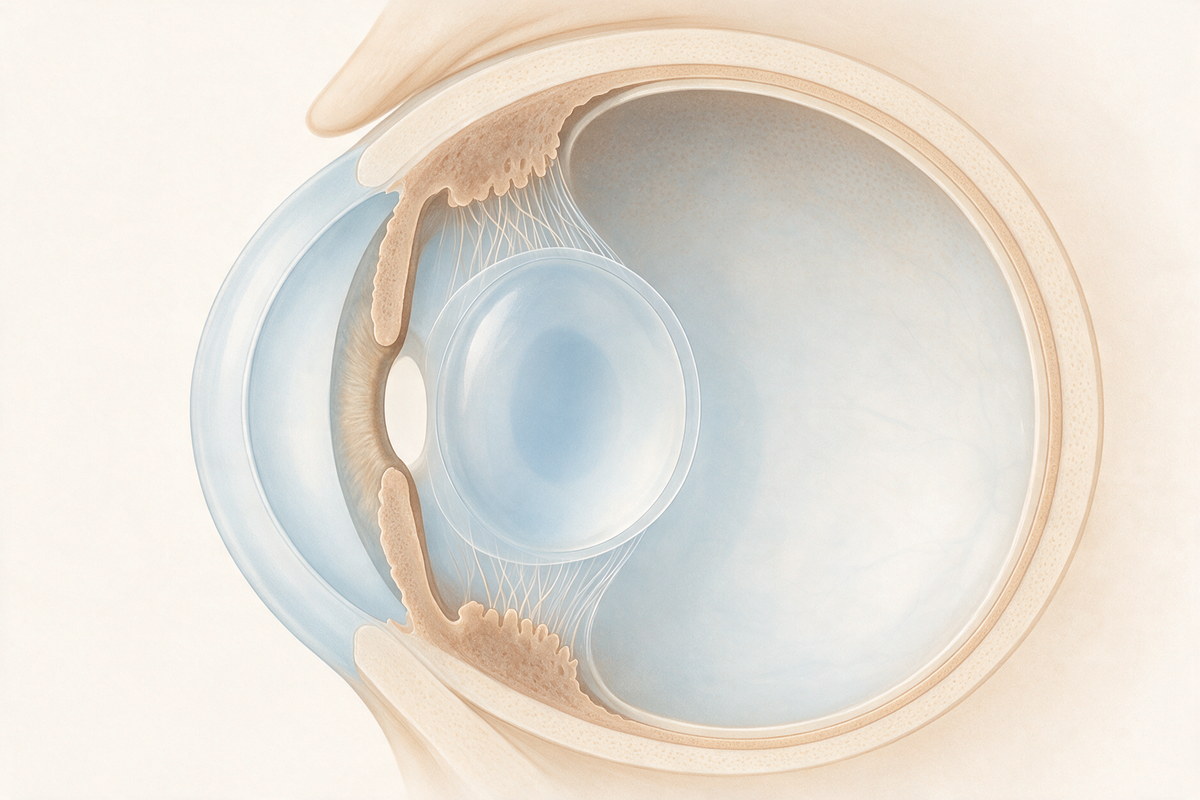
The natural lens sits inside a thin, transparent bag called the capsule. During cataract surgery the surgeon opens the front of this bag, removes the clouded lens material and places an artificial lens inside the bag. The back of the capsule is deliberately left in place. It supports the new lens, holds it in position and acts as a barrier between the front and the back of the eye.
That thin, clear back wall remains in your eye for life. Most of the time it stays clear. In some patients it slowly becomes cloudy.
Posterior capsule opacification, sometimes called secondary cataract or "after-cataract", is the clouding of that back capsule. A few of the natural lens cells that cannot be removed completely during surgery grow across the back wall, or the membrane thickens and wrinkles. Light then has to pass through a hazy layer, and vision becomes blurred, with more glare around lights and reduced contrast.
It develops gradually and without pain, and it does not make the eye red. It is more frequent in younger patients and in children, and it can appear a few months or many years after surgery. Not everyone develops it. It is a recognised effect of cataract surgery and does not mean anything went wrong with the operation.
The word "secondary cataract" is confusing because it implies that a cataract has regrown. It has not. The original lens is gone, and the artificial lens itself does not turn cloudy. What is cloudy is the membrane behind it. For this reason doctors usually prefer the term posterior capsule opacification. Knowing this removes a lot of worry, since patients often fear another operation inside the eye. Our page on cataract describes the condition and surgery itself, and the page on congenital cataracts covers the childhood form, where capsule clouding is a particular consideration.
Blurred vision after surgery deserves a proper examination rather than assumptions. The doctor checks your glasses prescription, the surface of the eye for dryness, the position of the lens implant, the capsule behind it, the retina and the pressure inside the eye. Looking at the capsule with a microscope at the slit lamp usually shows the clouding clearly, and a test called optical coherence tomography can look at the central retina when needed.
Distinguishing the causes matters because laser treatment of the capsule only helps when the capsule is the problem. If the blur comes from the retina or the cornea, it would not help, and a different treatment is required.
When the capsule is the cause, the usual treatment is a laser capsulotomy. It is a short outpatient procedure done in the clinic, with numbing drops and no incision. The laser makes a small opening in the cloudy back membrane, which lets light pass through clearly again. Most people notice improved vision within a day or so, though some take longer. The artificial lens stays in place. The capsule has no feeling, so the laser step is painless, although bright flashes may be seen during the procedure. Before it, drops to widen the pupil are given and the eye pressure may be checked afterwards.
Laser capsulotomy is considered a safe procedure, but like any treatment it has possible effects. A temporary rise in eye pressure can occur, which is why pressure is checked and drops may be prescribed. Floaters, small dots or strands in the vision, are common for a short time. Rarely, the retina can be affected, with a tear or detachment, and the artificial lens can shift or be marked. The risk is higher in people with certain eye conditions or high short-sightedness, and your surgeon will discuss this beforehand.
After the procedure, you can usually resume normal activities. Follow the advice you are given about drops and review visits. Once the capsule has been opened, it does not close again.
Gradual haze, glare or loss of contrast after cataract surgery is a reason to book a routine review. Contact your surgeon promptly if you notice:
After any eye surgery, or after laser, a sudden shower of floaters, flashes of light, a curtain or shadow across the vision, severe pain or a sudden loss of vision needs same-day assessment.
No. The clouded natural lens is removed and an artificial lens takes its place, so the same cataract cannot return. Vision can blur again if the thin capsule behind the lens becomes cloudy, which is treatable.
It is clouding of the thin membrane that stays behind the artificial lens after cataract surgery. It causes hazy vision and glare and is also called a secondary cataract. It develops slowly and painlessly.
It can appear within a few months or many years afterwards. It is more common in younger patients and in children. Not everyone develops it.
With a laser capsulotomy, a short outpatient procedure that opens a small clear window in the cloudy membrane. No incision is needed, and the artificial lens stays in place.
The procedure is not painful. Numbing drops are used, and the capsule itself has no sensation. Some people see bright flashes during it, and vision usually improves within a day or so.
Capsule clouding is a common cause, but dry eye, a changed glasses prescription or changes in the retina or cornea can also blur vision. An examination is needed to find which one applies.
Once the capsule has been opened, the cloudiness does not return in the same way. The opening stays, and treatment rarely needs to be repeated.
 English
